

When Property Caretakers Are Enough for Your Rental
For a furnished mid-term rental, property caretakers can be enough when you already manage the rental business and simply need someone nearby to look after the home. They are not a substitute for pricing, resident screening, lease administration or financial oversight unless those responsibilities are explicitly included in their agreement.
The practical question is not whether a caretaker is less expensive than a property manager. It is whether the responsibilities left with you are manageable. A well-defined arrangement can work for an owner with one stable rental. The same arrangement can leave costly gaps when an inherited home, frequent vacancies or an unpredictable work schedule demands more attention.
Separate property care from rental management
A caretaker generally focuses on the physical home. Depending on the agreement, that might mean checking a vacant property, reporting leaks, meeting repair technicians or preparing the house for an arriving resident. The title alone does not establish the scope.
Rental management also involves decisions about income, residents and compliance. Someone must handle inquiries, evaluate applicants, establish lease terms, track payments and respond when a resident wants to extend a stay.
Use this distinction when reviewing a proposed arrangement:
| Responsibility | Possible caretaker role | Responsibility that still needs an assigned owner |
|---|---|---|
| Property condition | Perform agreed checks and document concerns | Approve repairs and fund maintenance |
| Vendor access | Meet an authorized technician | Select qualified vendors and approve charges |
| Resident arrival | Check keys, furnishings and basic readiness | Confirm the lease, payment and arrival instructions |
| Resident concerns | Report or respond to agreed maintenance issues | Handle payment disputes, lease questions and extensions |
| Vacancy | Check the empty home | Set pricing, market the rental and secure the next resident |
Providers may offer broader services, but never assume a task is covered because someone has access to the property.
When property caretakers are enough
A caretaker-only arrangement works best when the home needs a local presence rather than someone to run the rental operation. For mid-term stays, fewer arrivals and departures can make this division more practical than it would be for a nightly rental.
You are a strong candidate if you already have a workable process for finding residents, responding to inquiries and administering leases. You should also be comfortable managing rent collection, keeping records and making timely decisions about maintenance.
The property's condition matters too. A well-maintained furnished home with reliable appliances is easier to oversee remotely than a house with recurring plumbing problems or deferred repairs. A caretaker can report a failing air conditioner, but someone still needs the authority, funds and availability to arrange its repair.
Longer stays do not eliminate resident communication. They simply change its rhythm. Instead of constant check-ins and turnovers, you may face questions about utility usage, internet service, maintenance access or extending the lease.
Test whether you can cover the remaining work
Before hiring property caretakers, walk through a realistic month rather than an uneventful one. Imagine that rent is late, the dishwasher leaks and the current resident asks to stay another six weeks.
Can you review the payment issue, approve a repair and decide whether the extension fits your plans? Can your local contact coordinate access without making promises you have not authorized?
A useful test is to assign a name to every responsibility:
- Rental administration: Who handles inquiries, applications, leases, payments and extensions?
- Physical care: Who checks the home, documents problems and coordinates agreed vendor visits?
- Decision-making: Who authorizes spending, handles disputes and decides what happens next?
- Backup coverage: Who responds when you or the caretaker is unavailable?
If every task has a capable person behind it, the arrangement may be sufficient. If several answers are “we will figure it out,” you are buying local availability without establishing a complete operating plan.
Owners who live elsewhere can use these home management essentials for out-of-town owners to organize access, communication and oversight before the next stay.
Put the scope in writing before handing over keys
A written agreement should explain what gets checked, when checks happen and how findings reach you. “Keep an eye on the house” is too vague to measure or enforce.
For a furnished mid-term rental, define the checks appropriate to the property and occupancy status. These might include visible water leaks, HVAC operation, exterior condition and readiness between stays. Occupied-home visits must follow the lease and applicable access requirements. A caretaker's key does not create unrestricted permission to enter.
Specify whether property caretakers only report problems or can also arrange repairs. Establish a spending limit, distinguish emergencies from routine work and identify the person who approves expenses above that limit. Document how emergency decisions are handled if you cannot be reached.
Require concise records: dated observations, relevant photos, vendor invoices and confirmation that approved work was completed. Set expectations for handling keys and access codes, including returning or disabling access when the agreement ends.
The scope should also state what is excluded. Lease negotiations, rent disputes, electrical repairs and insurance claims should not fall to an unqualified person simply because they are nearby. If you need help evaluating repair providers, these criteria for choosing a property maintenance company can help you separate routine oversight from skilled work.
Keep specialty responsibilities separate
This boundary is especially important with inherited homes that come with additional land or unusual responsibilities. Looking after the rental house does not automatically include managing animals, maintaining specialized equipment or arranging transport.
For example, if an inherited rural property includes cattle or horses that need relocating, a livestock load board such as Livestock Way connects shippers directly with haulers. That is a separate transport task, not something to include casually in a house-care agreement. Assign specialty work to an appropriate provider and keep the caretaker's responsibilities clear.
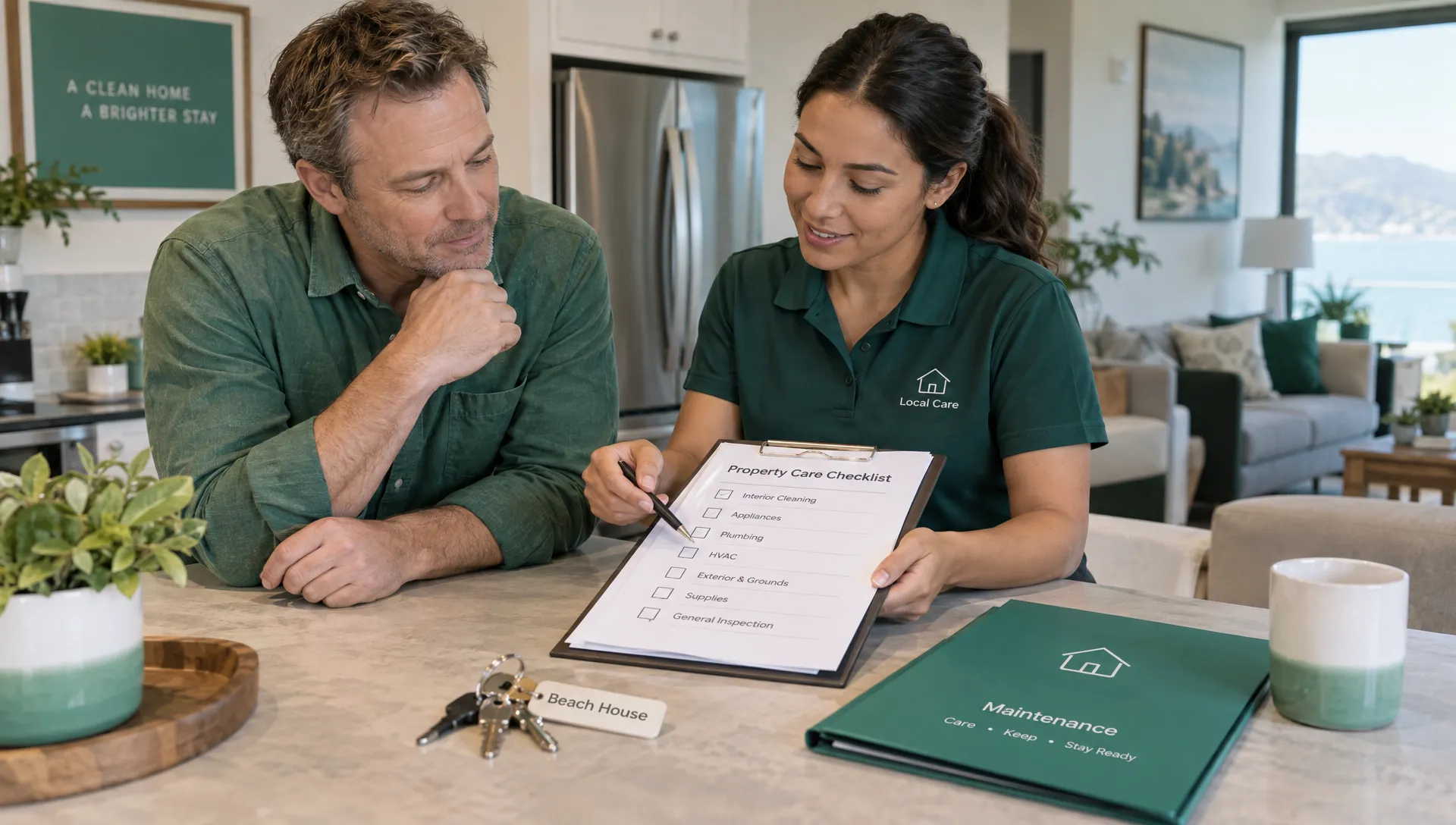
Compare the total cost, not just the monthly fee
Property caretakers may cost less than a broader management arrangement, but the fee alone does not tell you which option offers better value. You also need to account for the services you purchase separately and the work you retain.
Consider a hypothetical setup with $250 per month for agreed property checks, $100 for additional coordination visits and an average of $150 per month for turnover cleaning spread across the year. That is $500 before repairs, marketing expenses or your administrative time. These figures are illustrative, not Houston market rates or a quote from Scott Property Management.
If you spend five hours each month handling inquiries, payments and scheduling, include that time in your comparison. You do not have to assign it an hourly dollar value, but you should recognize whether it is realistic alongside your other commitments.
Compare proposals using the same responsibilities. Determine which fees cover coordination, which services cost extra and which expenses remain payable either way. A maintenance invoice does not disappear because a manager coordinates it.
The lower-cost option is only sufficient if it leaves no important responsibility unattended. For a capable self-managing owner, that may still be the caretaker arrangement.
Recognize when the arrangement stops being enough
A setup can work well initially and become inadequate as your circumstances change. Adding another rental, moving farther away or taking on a demanding job can turn manageable tasks into recurring delays.
Warning signs include unanswered resident messages, uncertainty about upcoming lease end dates, inconsistent repair records and avoidable gaps between stays. Repeated requests for the caretaker to negotiate rent or resolve resident disputes also suggest that the role has expanded beyond its original purpose.
For an inherited home awaiting a decision, property caretakers may be sufficient while it is vacant. Once you furnish it and accept paying residents, however, you also need a rental operating system. Physical checks alone do not cover that transition.
If you plan to sell, review whether a proposed mid-term lease fits your intended listing date and showing arrangements before accepting a resident. Do not assume the home can become vacant whenever your sales plans change.
When the retained workload becomes difficult to manage, evaluate when professional rental property management pays off. Base the decision on the tasks you need covered, not the service title.
Frequently asked questions
Can a caretaker collect rent or communicate with residents? Those duties may be available, but they should be expressly agreed upon and handled in accordance with applicable requirements. Confirm the provider's qualifications and authority rather than assuming these services come with routine property checks.
Are property caretakers a good fit for furnished mid-term rentals? They can be when the owner manages the rental business and needs local help with physical oversight. Longer stays may reduce turnover work, but screening, leases, maintenance decisions and resident communication still need coverage.
How often should a caretaker visit? Set the schedule around occupancy, the home's condition and specific risks. A vacant house and an occupied rental need different arrangements. Follow lease terms and applicable access rules for visits during a resident's stay.
Does hiring a caretaker replace insurance? No. Confirm that your insurance fits the property's rental use. Any separate damage-protection program should be reviewed for eligibility, exclusions and claim requirements rather than treated as a replacement for insurance.
Choose the level of support your rental needs
Start by writing down what you can reliably handle yourself. If the remaining need is local property oversight, a clearly scoped caretaker arrangement may be enough. If you also need help operating the rental, consider broader management support.
Scott Property Management specializes in furnished rental properties and includes up to $50,000 in property damage protection as standard risk protection. Discuss your mid-term rental plans and ask about the protection's terms, exclusions and claim requirements. The goal is to choose support that fits your responsibilities, availability and income goals.