
Rental Property Management Mistakes That Shrink Your Returns
For owners who want stronger net income, rental property management is less about collecting rent and more about preventing small leaks in performance from becoming large losses. In furnished mid-term rentals, where residents may stay 30 days to several months, the biggest return killers are often ordinary decisions: pricing for rent instead of profit, postponing maintenance, skipping documentation or choosing help based only on the lowest fee.
That matters whether you own an investment property, an inherited home you are not ready to sell or a furnished house you want to keep productive while retaining flexibility. Mid-term rentals can offer steadier occupancy than nightly stays, but only when the home is managed like an income-producing asset rather than a side project.
Why small mistakes matter in rental property management
Mid-term rental performance depends on the gap between gross rent and net return. A property can look successful because the monthly rent is strong, yet still underperform after cleaning, utilities, repairs, vacancy days, replacement furniture, platform fees and your own time are counted.
The challenge is that many mistakes do not feel costly at first. A delayed repair, a weak move-in checklist or a poorly matched resident may only cost a little this month. Repeated across multiple stays, those decisions can shrink annual returns and make the property feel more stressful than it needs to be.
Mistake 1: Pricing around gross rent instead of net income
Owners often compare furnished rental options by the headline rate. Short-term rentals may show higher nightly revenue, and long-term leases may look easier because they require fewer decisions. Mid-term rentals sit between those models, so the smarter comparison is net income after operating costs.
If you set pricing without accounting for utilities, cleaning frequency, furniture wear, stocking supplies, lawn care, platform costs and vacancy between bookings, you may overestimate your true return. A lower monthly rate with fewer gaps and fewer turnovers can outperform a higher rate that comes with constant resets.
The best rental property management decisions are made from net income, not the largest possible advertised rate. Before adjusting price, calculate what each stay length actually costs to deliver.
Mistake 2: Underestimating turnover costs
Turnover is one of the quietest profit drains in furnished rentals. Every checkout can trigger cleaning, laundry, restocking, inspection time, key or access code changes, minor repairs and scheduling work. When stays are very short, those costs arrive more often.
This is where rental property management should focus on total efficiency, not just occupancy. A mid-term stay that lasts one, two or three months can reduce the number of resets while still preserving more flexibility than a traditional year-long lease. If you are comparing stay lengths, Scott Property Management has a helpful breakdown of how monthly furnished bookings can reduce turnover costs.
A common mistake is treating cleaning as the only turnover expense. The larger cost is often coordination, vacancy exposure and wear from repeated move-ins and move-outs.
Mistake 3: Accepting the wrong resident fit
Mid-term residents are not always vacationers. They may be relocating professionals, medical workers, insurance housing residents, people between homes or families testing a neighborhood before buying. Each situation can be a good fit, but the property, house rules and stay terms need to match the use case.
Weak screening and vague expectations create expensive friction. A resident who does not understand parking rules, pet limits, utility boundaries or checkout requirements can cause avoidable conflict and damage. Screening should always be consistent and compliant with housing laws. HUD’s Fair Housing Act resources are a useful reminder that criteria should be objective, documented and applied fairly.
A friendly process can still be firm. Clear terms protect both the owner and the resident.
Mistake 4: Treating furniture like decor instead of equipment
A furnished rental is not simply a house with attractive rooms. The furniture, linens, cookware, mattresses, electronics and small appliances are part of the income system. If they fail, disappear or wear out early, your return takes the hit.
A practical rental property management plan treats furnishings as working assets with expected lifespans, replacement standards and an inventory record. Durable, easy-to-clean items often beat trendy pieces that photograph well but do not hold up to repeated use.
| Mistake | How it shrinks returns | Better habit |
|---|---|---|
| Pricing from gross rent only | Makes profit look stronger than it is | Compare income after utilities, cleaning, repairs and vacancy |
| Too many turnovers | Raises labor, cleaning and replacement costs | Favor stay lengths that balance income and stability |
| Weak resident fit | Increases complaints, damage risk and early departures | Use clear criteria, written expectations and consistent screening |
| No furnishing inventory | Makes loss or damage harder to prove | Document items, condition and replacement standards |
| Delayed maintenance | Turns small repairs into larger expenses | Inspect routinely and fix issues early |
Mistake 5: Letting maintenance become reactive
Deferred maintenance can feel like savings until a small issue becomes a large bill. A slow leak can damage cabinets and flooring. A struggling air conditioner can create an emergency during Houston heat. A loose handrail or door issue can affect safety and guest satisfaction.
For furnished mid-term rentals, maintenance is also part of reputation management. Residents staying for weeks or months expect a home that functions reliably. When basic systems fail and communication is slow, the stay can become uncomfortable quickly.
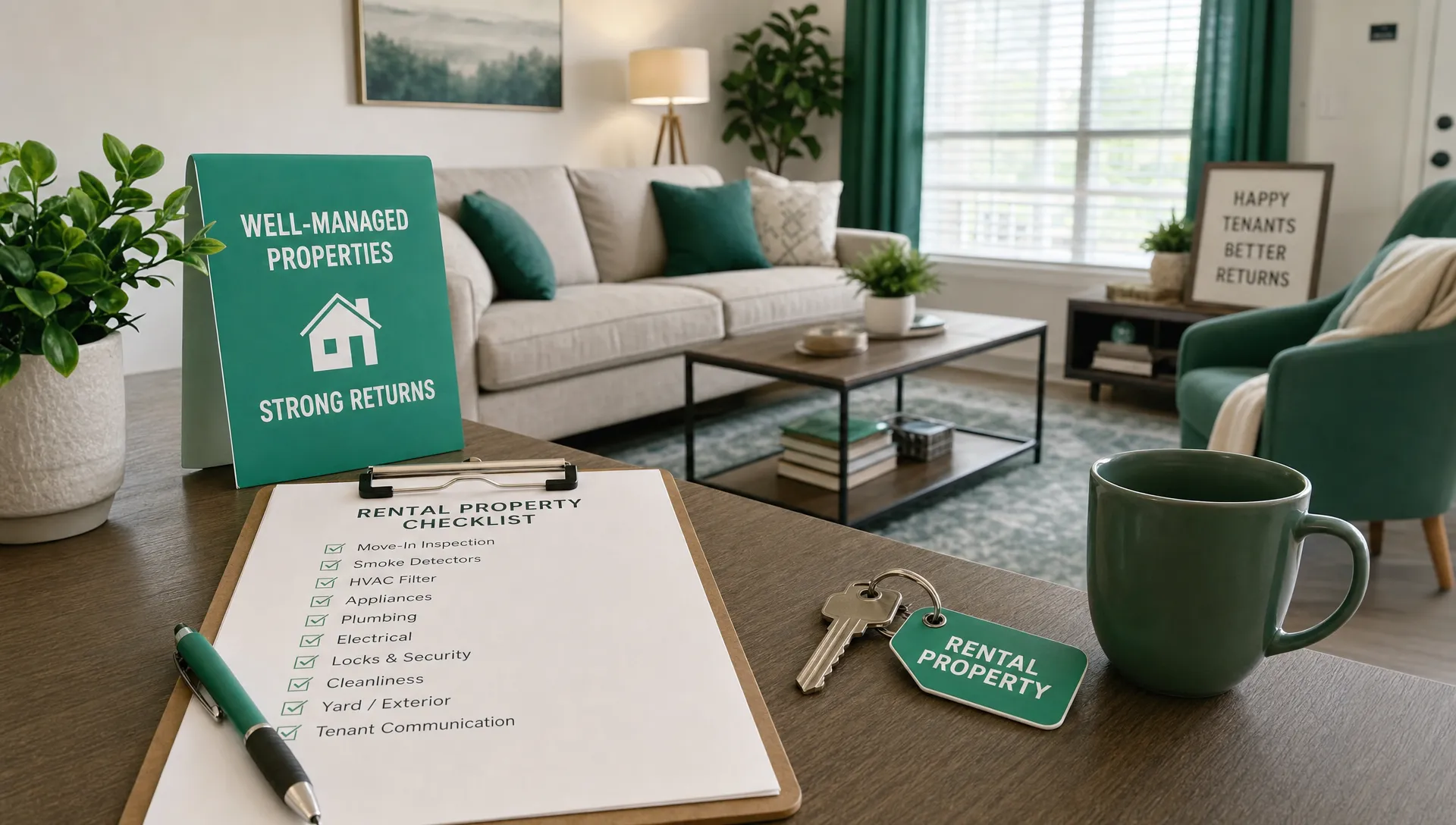
A preventive approach usually costs less than emergency response. Regular filter changes, appliance checks, plumbing inspections, exterior upkeep and post-stay walkthroughs help identify problems before they affect income. For a deeper look at this return-protection angle, see how property maintenance services prevent expensive rental damage.
Mistake 6: Skipping documentation and damage protection
For furnished mid-term rentals, documentation is financial protection. Photos, inventory lists, appliance details, access instructions, signed terms and maintenance notes create a record of what was provided and what condition it was in.
Strong rental property management makes move-in condition photos, inventory lists, house rules and vendor records part of the operating routine. This is especially important for inherited homes or properties with newer furnishings, where owners may not have a long history of replacement costs.
Damage protection also matters. Scott Property Management provides up to $50,000 in property damage protection as standard risk protection for furnished rental owners. That does not replace good documentation or preventive oversight, but it adds another layer of confidence when your property is occupied by residents you do not personally know.
Mistake 7: Responding slowly to resident issues
A mid-term resident is living in the property, not passing through for a weekend. Small inconveniences matter more over a multi-week stay. Slow responses to Wi-Fi problems, appliance issues, access questions or maintenance requests can turn a good resident relationship into a source of friction.
Good communication protects reviews, reduces disputes and helps residents report problems before they become expensive. The goal is not to say yes to every request. The goal is to acknowledge quickly, set realistic expectations and resolve legitimate problems through reliable vendors and clear processes.
Owners who self-manage often underestimate the time required. Even one property can create inconvenient messages during work hours, weekends or travel.
Mistake 8: Managing from out of town without a local plan
For out-of-town owners, rental property management becomes more important because distance increases response time. You may not be nearby to confirm a leak, meet a repair vendor, inspect after checkout, replace a broken item or handle a lock issue.
This challenge is common for investors, inherited-home owners and sellers who moved before deciding whether to keep or sell the property. A home can remain a valuable asset, but only if someone local can protect it operationally.
A local plan should answer practical questions before they become emergencies. Who checks the property between stays? Who verifies repairs? Who confirms the home is clean, stocked and ready before the next resident arrives? Without those answers, distance can quietly reduce returns.
Mistake 9: Choosing management based only on the lowest fee
The cheapest rental property management option can become expensive if the service level does not match the property’s needs. A furnished mid-term rental requires more than rent collection. It needs preparation, resident coordination, maintenance awareness, turnover planning, documentation and a clear understanding of how stay length affects income.
A low monthly percentage may look attractive, but owners should ask what is included and what is billed separately. Is the home inspected between stays? Are furnishings documented? How are repairs coordinated? How is vacancy reduced? How are residents selected and expectations communicated?
When comparing providers, look at the cost of mistakes, not only the cost of the fee. Scott Property Management explains this difference in more detail in its guide to how rates for property management vary by service level.
A quick return-protection checklist for owners
A profitable furnished rental does not require perfection, but it does require consistent habits. Before your next booking or management review, look for the weak points that could be draining income.
- Compare projected rent to net income after utilities, cleaning, maintenance and vacancy.
- Track turnover work, including inspection time and restocking costs.
- Use clear written expectations for pets, parking, utilities and checkout.
- Keep a photo-based furnishing inventory and update it after each stay.
- Schedule preventive maintenance instead of waiting for emergencies.
- Review management service levels before choosing based on price alone.
Small improvements compound. Reducing one unnecessary vacancy gap, preventing one avoidable repair or choosing a better-fitting resident can make the property feel calmer and perform better.
Frequently Asked Questions
What is the biggest rental property management mistake for furnished homes? The biggest rental property management mistake is focusing on gross rent while ignoring turnover, utilities, maintenance, vacancy and furniture replacement. Net income is the number that tells you whether the strategy is actually working.
Are mid-term rentals less work than short-term rentals? They can be less operationally intense because residents usually stay longer, which can mean fewer turnovers, fewer cleanings and less repeated coordination. They still require clear terms, responsive maintenance and strong documentation.
Should I furnish an inherited home instead of selling it? It depends on your goals, location, property condition and cash flow needs. A furnished mid-term strategy may help you earn income while keeping ownership flexibility, but the home should be evaluated for maintenance needs, furnishing costs and realistic demand.
How do management fees affect returns? Management fees matter, but they should be weighed against service level and risk reduction. A lower fee is not always better if it leads to longer vacancies, poor documentation, slow repairs or higher turnover costs.
Keep more of your furnished rental income
Avoiding return-shrinking mistakes is easier when your property is managed with the realities of furnished mid-term rentals in mind. Pricing, maintenance, documentation, resident fit and turnover planning all work together to protect net income.
Scott Property Management specializes in furnished rental properties and helps owners pursue steadier income with less wear and tear than a high-turnover model often creates. If you want a professional, friendly partner for your Houston-area furnished rental, start by reviewing your current management approach and identifying the mistakes that may be costing you the most.