

How Rates for Property Management Vary by Service Level
If you are comparing rates for property management, the lowest published percentage can look appealing. But for a furnished mid-term rental, a rate only makes sense when you know what service level it buys: leasing, resident screening, rent collection, utility coordination, upkeep, turnover support and risk protection. A cheaper plan that leaves you coordinating repairs from work or paying for repeated cleanings may cost more than a higher-service option that keeps the home occupied and well cared for.
For real estate investors, landlords, inherited home owners and sellers who are not ready to list, management pricing should be judged by net income and peace of mind. That is especially true in the mid-term rental space, where guests often stay for 30 days or longer and the property must feel move-in ready from day one.
Why service level matters more than the headline fee
Property management is not one uniform service. Some companies only place a tenant. Others collect rent and handle basic maintenance. A more involved manager may coordinate furnished rental operations, track condition between stays, manage vendor access and help reduce vacancy gaps.
The difference matters because each service level changes the manager's workload and the owner's involvement. If you live nearby, have trusted contractors and enjoy handling details, a lighter plan may work. If you own from another city or want a furnished home to operate as a mid-term rental, the right service level may need to cover more than rent collection.
A management proposal should answer one practical question: what tasks are being removed from your plate, and how does that improve the property's performance?
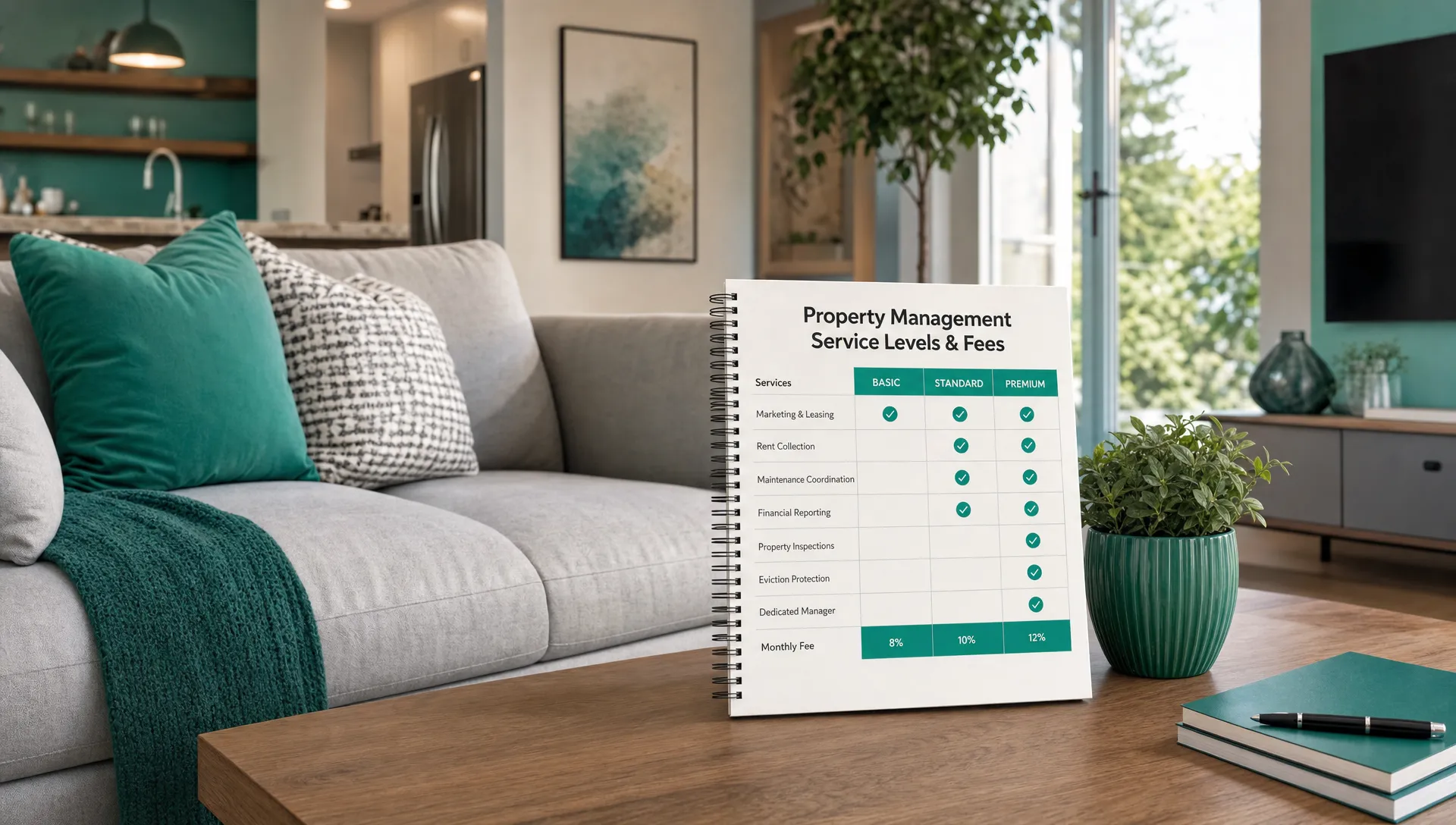
How rates for property management change by service level
The most useful way to compare rates for property management is to group each proposal by service level first, then look at the fee. A low monthly percentage for a limited plan is not automatically better than a higher percentage for a plan that includes more coordination, better upkeep and fewer owner responsibilities.
| Service level | What is usually included | How pricing usually appears | Best fit |
|---|---|---|---|
| Leasing-only or tenant placement | Marketing, showings, screening and lease start | One-time placement fee or percentage of first month's rent | Local owners who want to self-manage after move-in |
| Basic rent collection | Rent processing and limited communication | Small monthly flat fee or lower percentage | Owners who already handle maintenance and compliance |
| Standard full-service management | Rent collection, maintenance coordination, renewals and inspections | Percentage of monthly rent, sometimes with separate leasing fees | Traditional long-term rental owners |
| Furnished mid-term rental management | Listing support, guest or resident fit, furnishing readiness, utility coordination, maintenance and turnovers | Higher percentage, hybrid fee or customized proposal | Furnished homes serving stays of 30 days or longer |
| Premium asset management | Broader performance oversight, vendor strategy, condition reporting and owner advisory | Higher fee or tailored pricing | Out-of-town owners, investors with multiple homes or owners prioritizing hands-off operations |
This table is a starting point, not a substitute for reading the agreement. The same percentage can mean very different things if one manager includes inspections and another bills separately for every visit.
Leasing-only or tenant placement
Leasing-only service is usually the lightest management option. The manager helps attract, screen and place a qualified resident, then the owner takes over ongoing communication, repairs, rent collection and lease enforcement.
This can be cost-effective when you have time, live near the property and already understand landlord responsibilities. It is less ideal for furnished mid-term rentals because the work continues after placement. Furniture condition, supplies, utilities, maintenance access and future vacancy windows still need attention.
Standard full-service management
Standard full-service management generally covers ongoing rent collection, resident communication and maintenance coordination. It is common for long-term rentals where the resident signs a lease, transfers utilities and stays for a year or more.
When you compare rates for property management at this level, ask which tasks are included in the monthly fee and which are billed separately. For example, lease renewals, periodic inspections, maintenance markups, eviction coordination and year-end reporting may or may not be part of the base service.
Furnished mid-term rental management
Furnished mid-term rental management is more operational. The property is not just a house with a lease. It is a furnished living environment expected to work smoothly for traveling professionals, relocating families, insurance-displaced residents and other longer-stay occupants.
That means the manager may need to pay closer attention to furniture readiness, internet, utility continuity, entry access, repair timing and the condition of household items. For that reason, rates for property management in the mid-term category often reflect active coordination rather than passive rent collection.
Scott Property Management focuses on furnished rental properties, with an emphasis on mid-term rentals that can provide more predictable income than nightly short-term stays. If you want a deeper look at the operating model, the guide to mid-term rental management explains why this strategy can work well for Houston owners.
Fee components owners should compare
The cleanest way to compare rates for property management is to separate the base management fee from the add-on fees. A proposal with a lower monthly rate can become expensive if common tasks are billed separately or if the owner must keep handling time-consuming work.
Common fee categories include:
- Leasing or placement fee: Charged when a new resident is placed, often separate from monthly management.
- Monthly management fee: A percentage of collected rent or a flat monthly fee.
- Renewal fee: Charged when a lease or stay is extended.
- Maintenance coordination or markup: A fee added to vendor invoices or a separate charge for project oversight.
- Inspection or property visit fee: Charged for move-in, move-out, mid-stay or periodic condition checks.
- Setup fee: Used for onboarding, photos, listing preparation, furnishing review or account setup.
- Turnover fee: More common in furnished rentals, covering cleaning coordination and readiness between stays.
- Accounting or statement fee: Sometimes charged for reporting, tax documents or owner portal administration.
In Texas, residential rental responsibilities are shaped in part by Texas Property Code Chapter 92, so fee comparisons should also account for how well a manager handles notices, deposits, repairs and documentation. Strong administration is not flashy, but it protects owners from costly mistakes.
Why mid-term rentals can justify a different fee structure
Mid-term rentals sit between traditional long-term leases and nightly short-term rentals. They typically involve fewer turnovers than short-term rentals, but they require more readiness and flexibility than a standard unfurnished lease.
That middle ground is why owners should not assume every management percentage can be compared side by side. A short-term rental manager may charge more because of frequent guest messaging, cleanings and calendar changes. A traditional long-term manager may charge less because the property requires less operational oversight once leased. Mid-term rentals often aim for a balance: strong furnished-rental income with fewer turnovers, lower cleaning demands and reduced vacancy between bookings.
If you are weighing nightly bookings against longer furnished stays, Scott Property Management's article on how property management for short-term rentals affects profit offers a helpful comparison. The rate only tells part of the story. The real question is how the service model affects net income after vacancy, maintenance, turnover work and owner time.
A simple framework for comparing proposals
Before choosing a manager, create a side-by-side comparison that translates each proposal into owner outcomes. Rates for property management are easier to evaluate when you connect them to the work performed, the risks reduced and the income protected.
| Comparison question | Why it matters for mid-term rentals |
|---|---|
| Is pricing based on collected rent or scheduled rent? | Collected-rent pricing better aligns the manager with actual cash flow. |
| Are utilities, internet and furnishing readiness addressed? | Furnished stays depend on a move-in ready experience. |
| Who coordinates cleaning and turnover tasks? | Even with fewer turnovers than short-term rentals, each vacancy window matters. |
| Are inspections or condition checks included? | Furnished homes need documentation to protect value and identify damage early. |
| How are maintenance requests handled? | Fast coordination can prevent small repairs from becoming expensive damage. |
| What risk protection is included? | Damage exposure is higher when a home is furnished and used by multiple occupants over time. |
For example, Scott Property Management provides up to $50,000 in property damage protection as standard risk protection. That kind of protection can change how an owner views the management rate because it addresses a real risk of furnished rental ownership.
Maintenance also deserves special attention. The article on how property maintenance services prevent expensive rental damage explains why timely repairs and routine oversight are part of protecting cash flow, not just keeping a property looking nice.
Red flags in very low management rates
Low pricing is not always a problem. Some owners need a narrow service and do not want to pay for more. Still, rates for property management that are far below the market can signal that important work is excluded, delegated back to the owner or billed later.
Be cautious if a proposal is vague about maintenance response times, resident screening, inspection frequency, after-hours issues, accounting, renewal costs or who handles turnover readiness. Also ask whether the manager has experience with furnished mid-term rentals, since a standard long-term process may not fit a property that includes furniture, housewares, utilities and shorter lease cycles.
The best proposals are transparent. They explain what is included, what is not included, how vendors are chosen, how owners receive updates and how the manager thinks about protecting net income. A professional manager should be comfortable discussing the tradeoff between fee level and service level without pressuring you into a plan you do not need.
How to decide which service level fits your property
Start with your own constraints. If you live close to the property, have flexible time and want to stay hands-on, a lighter management service may be enough. If you inherited a home, moved out of Houston or own an investment property that needs reliable oversight, a fuller service level can be worth the cost.
Next, consider the rental strategy. Furnished mid-term rentals work best when the property is comfortable, clean, well maintained and ready for a resident who may be arriving for work, relocation or an insurance-related stay. A management company that understands that use case can help reduce the friction that causes vacancy, poor reviews or repair surprises.
Finally, compare expected net income, not just the fee. The right manager should help you understand how service level affects rent potential, turnover cost, vacancy risk and property condition over time.
Frequently Asked Questions
What is a normal rate for property management? Rates vary by market, property type and service level. Traditional long-term management is often priced differently from furnished mid-term rental management because the amount of coordination is not the same.
Why do furnished mid-term rentals cost more to manage than standard rentals? Furnished homes require more oversight around condition, utilities, furniture, cleaning and move-in readiness. Even with fewer turnovers than short-term rentals, the manager usually has more operational responsibility than with an unfurnished annual lease.
Are the lowest rates for property management usually the best deal? Not always. A low rate can be a good fit for a narrow service, but it can also exclude inspections, maintenance coordination, renewals, turnover support or reporting that protects your income.
Should I choose a percentage fee or a flat fee? Both can work. Percentage fees align with rent collected, while flat fees can be predictable. The better choice depends on what is included, how active the property is and whether the manager's incentives match your goals.
How should out-of-town owners compare management options? Out-of-town owners should focus heavily on communication, maintenance coordination, property visits, documentation and risk protection. The right service level should reduce emergency decisions and help the owner feel informed without being pulled into daily operations.
Find the service level that protects your rental income
For furnished rental owners, the right management rate is not just an expense. It is part of the strategy that keeps the property occupied, cared for and positioned for steady income.
Scott Property Management specializes in furnished rentals and mid-term rental operations for Houston-area owners. If you are comparing service levels and want a clearer view of how your home could perform, visit Scott Property Management to start a conversation about the right fit for your property.