

Property Maintenance Before Hurricane Season in Houston
Hurricane preparation for a Houston rental starts well before a storm appears in the forecast. For owners of furnished mid-term rentals, property maintenance should protect both the building and the people living in it. A loose roof component, blocked drain or unclear emergency contact can turn a manageable problem into a repair bill and an interrupted stay.
Longer bookings often mean fewer turnovers, but they also mean you may not have an empty property available for seasonal work. The practical approach is to schedule inspections early, coordinate access with residents and document what has been completed. This guide focuses on those hurricane-specific preparations, rather than routine upkeep alone.
Start With Houston’s Wind and Flood Exposure
The National Hurricane Center’s preparedness guidance identifies June 1 through November 30 as the Atlantic hurricane season. Plan major inspections and repairs before June whenever possible. If the season is already underway, address outstanding issues during safe weather, not while a storm is approaching.
Houston owners need to consider wind damage and flooding separately. Roof repairs can reduce wind-driven rain intrusion, but they will not stop rising floodwater from entering a home.
Review the property’s flood designation through the FEMA Flood Map Service Center, then compare it with the home’s actual history. Ask about previous water intrusion, street flooding, drainage problems and nearby construction that may have changed runoff patterns. A location outside a mapped high-risk flood zone is not a guarantee against flooding.
Build a Property Maintenance Timeline Before June
Use a schedule that leaves room for contractor availability, repair estimates and resident coordination. The following is a planning framework, not a substitute for property-specific advice.
| Timing | Priority work | Record to keep |
|---|---|---|
| February to March | Review prior storm damage, insurance and unresolved repair items | Inspection notes and policy questions |
| March to April | Arrange roof, tree and drainage assessments | Photos, estimates and contractor findings |
| April to May | Complete approved repairs and check storm-protection hardware | Invoices and completion photos |
| Before June | Update resident instructions, emergency contacts and furnished inventory | Current communication plan and inventory |
| During hurricane season | Recheck drainage and exterior conditions after significant weather | Dated observations and follow-up work |
For an occupied rental, provide notice and arrange access according to the lease and applicable law. Avoid concentrating every inspection into the final week of May, when a repair may require another visit or a part that is not immediately available.
Set a budget that separates known repairs from an emergency reserve. A defective roof flashing needs a repair allocation; an unexpected post-storm leak needs available funds and someone authorized to act. Owners comparing contractors can use these rental maintenance company selection criteria to evaluate communication, occupied-home experience and documentation.
Inspect the Roof, Drainage and Trees First
Exterior property maintenance should begin with the parts of the home most exposed to wind and heavy rain. Have a qualified roofing professional evaluate loose or damaged materials, flashing, penetrations and signs of previous leaks. Interior ceiling stains also deserve investigation, even if they appear dry during the inspection.
Ask for photographs and a written explanation of recommended work. A vague “roof looks fine” gives an out-of-town owner little basis for deciding whether additional repairs are needed. Do not ask residents to climb onto the roof or inspect it during severe weather.
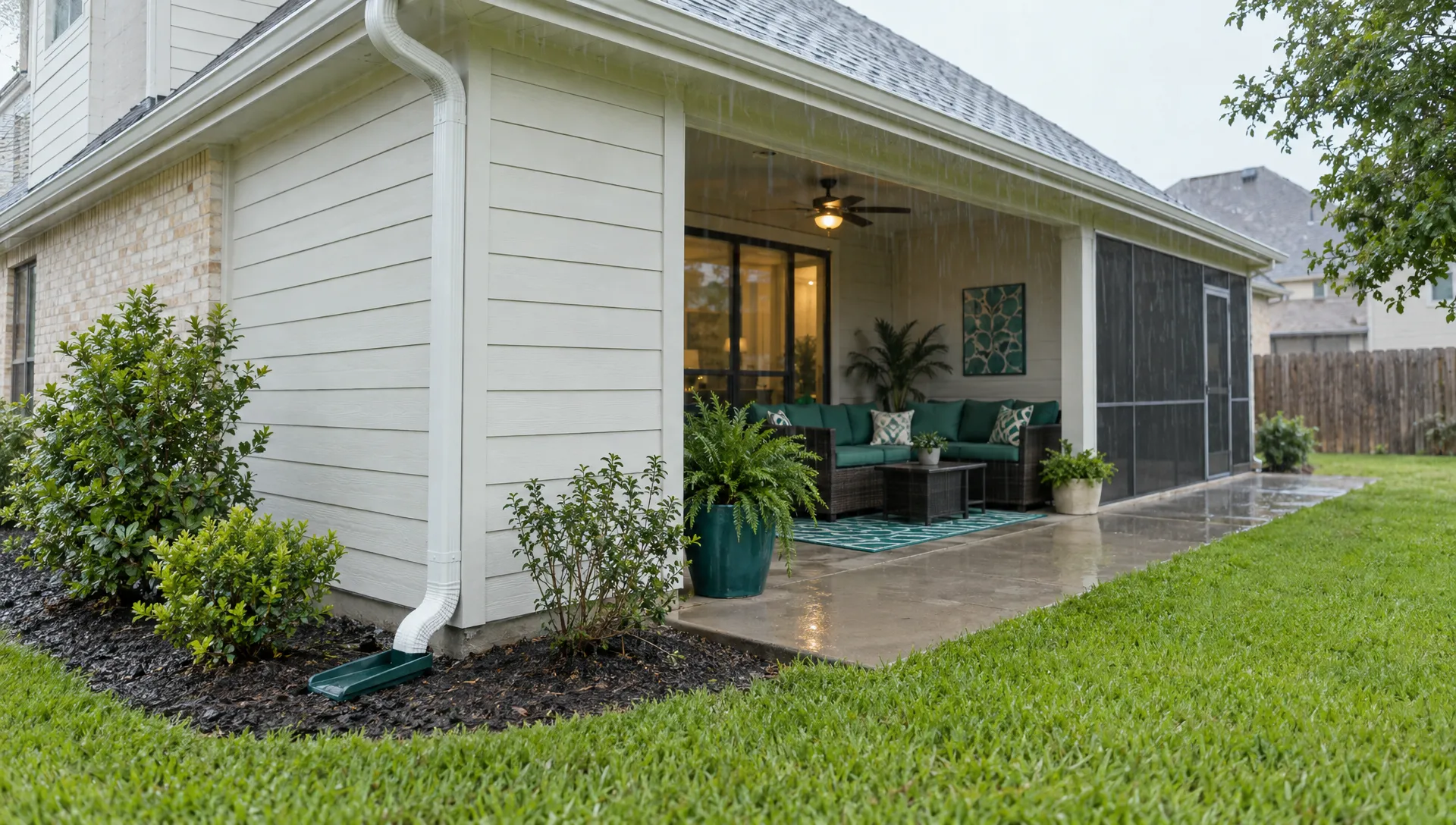
Clear gutters and downspouts, then check where discharged water goes. Water should not be directed toward the foundation or neighboring property. Look for blocked yard drains, soil buildup near the home and recurring pooling after ordinary rain. Drainage improvements can reduce localized problems, but they cannot make a property floodproof.
Have an arborist assess dead limbs, damaged trees and branches threatening the roof. Avoid rushed, excessive pruning immediately before a storm. Secure loose fencing and inspect exterior attachments such as patio covers. Structural concerns should go to a qualified contractor rather than being treated as a quick handyman task.
Prepare the Furnished Rental for an Occupied Storm Season
A furnished home has more owner-supplied items to secure and document than an unfurnished rental. Patio furniture, grills, umbrellas and decorative objects can become windborne hazards. Decide where each item can be stored without blocking exits, utility equipment or residents’ living space.
For mid-term stays, property maintenance also requires a clear division of responsibilities. Specify who will move outdoor furnishings, install any approved storm panels and check the home after residents leave. Do not assume a resident will perform physical storm-preparation work simply because they are staying for several months.
Check window and door seals, locks and any existing hurricane shutters. If the home uses removable panels, confirm that the correct panels, fasteners and installation instructions are available. Installation should be assigned to someone capable of completing it safely before conditions deteriorate.
Give residents a short property-specific guide explaining emergency contacts, evacuation information sources and how to report a leak. Include instructions for locating the water shutoff, but distinguish a normal household leak response from situations involving floodwater, electrical hazards or damaged equipment. Resident safety takes priority over protecting furniture.
Check Cooling, Power and Water Systems
Houston’s heat makes an extended outage especially disruptive for an occupied rental. Schedule HVAC service before peak summer demand and have the technician check condensate drainage as part of the visit. Confirm that smoke and carbon monoxide alarms work and replace batteries where applicable.
Include utility access in the property maintenance inspection. Electrical panels, water shutoffs and equipment service areas should be identifiable and accessible. Ask qualified professionals about flood exposure or existing defects; do not improvise electrical modifications or raise equipment without proper assessment.
If the property has a generator, arrange service and clarify who may operate it. Ready.gov’s power-outage guidance says generators should be used outdoors, at least 20 feet from windows, doors and attached garages. They should never run inside a home or garage. Any connection to household wiring requires an appropriate professional installation, not an improvised connection.
Avoid promising uninterrupted cooling or electricity unless you have verified the equipment’s capacity and operating arrangements. Residents need an accurate explanation of what backup systems can support and what they cannot.
Document Condition and Review Insurance Separately
Photograph the roof where safely accessible to a professional, exterior walls, major appliances and furnished rooms before hurricane season. Record existing damage rather than presenting every item as new. Keep receipts and identifying details for higher-value furnishings, along with copies of inspection reports and completed repairs.
These records support property maintenance decisions and may help document an insurance claim, but photographs do not establish coverage. Store copies somewhere accessible if the home loses power or becomes unsafe to enter.
Ask your insurance agent whether the policy accurately reflects furnished rental use. Review windstorm provisions, hurricane deductibles, flood coverage and any loss-of-rental-income protection. Also ask about exclusions, claim requirements and waiting periods before purchasing or changing coverage. Do not assume a standard property policy covers flooding.
Scott Property Management provides up to $50,000 in property damage protection as standard risk protection. That should not be treated as a substitute for appropriate property, wind or flood insurance. Ask for the protection terms and exclusions, including whether a particular type of storm damage qualifies, before relying on it in your hurricane plan.
Address Unsafe Structures Before Storms Expose Them
An inherited home or older investment property may have a deteriorated shed, unstable patio cover or another structure that needs more than a repair. Have its condition assessed early enough to decide whether repair or removal is appropriate.
When property maintenance leads to planned demolition, hazard identification belongs before removal work. Older building materials may contain asbestos or other hazardous substances, and utilities or structural connections may create additional risks. A qualified local contractor should determine which surveys, permits and utility disconnections apply to the proposed scope.
This explanation of what a pre-demolition survey should cover outlines the role of hazardous-material checks, structural review and documentation. Use it as background for discussions with your contractor, then confirm Houston and Texas requirements for the actual project. Do not rush demolition or disturb suspect materials because a storm is approaching.
Establish a Storm-Response Plan With Clear Authority
An inspection is only useful if someone can respond when conditions change. Your property maintenance plan should identify the primary contact, a backup contact and the person authorized to approve urgent work. For remote owners, the access and communication systems described in these out-of-town home management essentials provide a useful foundation.
Put these arrangements in writing:
- Resident communication: Identify who sends updates and where residents should follow official evacuation instructions.
- Preparation work: Assign responsibility for outdoor items and approved window protection before unsafe conditions begin.
- Emergency spending: Establish approval limits and an escalation contact for work exceeding them.
- Property access: Document lawful access arrangements and how authorized contractors obtain entry.
- Post-storm assessment: Arrange an inspection once authorities permit access and conditions are safe.
Never ask residents or contractors to enter floodwater, approach downed power lines or remain at the property to protect it. After a storm, address immediate safety concerns first. Document damage when safe, contact the insurer promptly and follow claim instructions before nonemergency repairs. Longer stays may reduce turnover, but they do not remove the possibility of storm-related vacancy or interrupted rent.
Frequently Asked Questions
When should Houston landlords start hurricane preparation? Begin inspections and budgeting in late winter or early spring, with major repairs targeted for completion before June 1. Continue checking exterior conditions throughout hurricane season, especially after heavy rain or strong winds.
What should come first when the budget is limited? Prioritize life-safety concerns, active leaks, unstable structures and defects that could let wind or water into the building. Ask qualified contractors to distinguish urgent repairs from optional improvements. Insurance review should happen alongside the physical work.
Who handles preparation in an occupied mid-term rental? Assign responsibilities before a storm threatens. Owners or their authorized representatives should arrange skilled work, while residents receive clear instructions about communication and personal safety. Do not rely on informal assumptions about who will secure the home.
Does property maintenance eliminate hurricane damage? No. It can reduce avoidable damage and improve readiness, but severe wind and flooding can still affect a well-maintained home. Preparation should combine physical repairs, appropriate insurance, emergency reserves and a realistic response plan.
Plan Ahead for Your Houston Mid-Term Rental
Before your next furnished booking or lease renewal, review the home’s hurricane-readiness gaps and schedule outstanding work. A documented plan makes it easier to coordinate repairs without unnecessary disruption to residents.
Contact Scott Property Management to discuss your Houston furnished rental strategy. Ask how inspection responsibilities, resident communication and emergency decisions would be handled for your property, so expectations are clear before hurricane season begins.