
Is Airbnb for a Year a Smart Strategy for Rental Owners?
Airbnb for a year can be a smart strategy for rental owners, but a twelve-month booking is not automatically the best way to earn dependable furnished-rental income. It reduces scheduled turnovers while tying your property to one occupant, one rate and a long commitment. The decision should come down to net income, payment risk and how soon you might need the home back.
For Houston investors, landlords and owners of inherited homes, there is another option: operate a furnished rental throughout the year using several mid-term stays. That approach can preserve flexibility without returning to the constant turnover of weekend bookings.
A year-long booking and a year-round business are different
A guest staying for twelve months creates a different business arrangement from a property that accepts furnished bookings throughout the year.
With one year-long reservation, you negotiate the economics once and depend heavily on that occupant's continued payments. With a mid-term model, often built around stays of one to six months, you have more opportunities to adjust pricing, schedule maintenance and reconsider your plans between occupants.
Neither arrangement guarantees continuous income. One long reservation can end early or experience payment problems. Several shorter reservations can leave gaps that reduce annual earnings.
The distinction between long-term Airbnb stays and Houston mid-term rentals matters most when you want furnished-rental income without committing the home for twelve months. Airbnb for a year makes more sense when the owner's timeline is stable than when a sale, move or family use remains uncertain.
Compare annual cash flow, not the advertised monthly rate
A higher furnished-rental rate means little if utilities, booking costs and empty months consume the premium. Compare each strategy over the same twelve-month period, using realistic occupancy rather than assuming every available night will sell.
The following example uses hypothetical planning figures, not Houston market averages, Airbnb fee schedules or Scott Property Management pricing. The fee and management budgets are placeholders that should be replaced with actual quotes.
| Annual planning item | One twelve-month stay | Several mid-term stays |
|---|---|---|
| Monthly rent during occupied periods | $3,000 | $3,350 |
| Occupied months | 12 | 10.5 |
| Gross rental revenue | $36,000 | $35,175 |
| Utilities and internet | $3,600 | $3,600 |
| Repairs and furnishings reserve | $1,800 | $1,800 |
| Turnover and preparation budget | $350 | $1,050 |
| Platform and payment cost allowance | $1,200 | $1,400 |
| Management budget | $3,600 | $3,600 |
| Cash remaining before fixed ownership costs | $25,450 | $23,725 |
In this scenario, the year-long stay produces $1,725 more despite its lower monthly rate. Occupancy outweighs the mid-term pricing premium.
However, these figures exclude mortgage payments, property taxes, insurance, HOA dues and initial furnishing costs. They also assume the scheduled rent is collected. Airbnb for a year should be evaluated against those complete ownership costs, not just against cleaning savings.
Test how much vacancy your premium can absorb
Using the example's assumed annual expense budgets, the mid-term strategy would need roughly eleven occupied months at $3,350 to match the year-long option. Actual expenses may change as booking activity changes, so treat this as a planning calculation rather than a forecast.
Run a second version with an unexpected vacancy and a third with a major repair. A strategy that only works under perfect conditions is not providing much income stability.
Also compare both furnished options with a conventional unfurnished lease. A comparison of long-term leases and mid-term rentals can help you decide whether the furnishing investment and utility responsibilities are justified for your property.
Account for the commitment before accepting twelve months
The financial value of a long booking depends partly on what you give up. For some owners, uninterrupted occupancy is ideal. For others, access to the property or an earlier sale is worth more than a modest rental premium.
Selling or moving back becomes more complicated
If you may sell within the next year, a long occupancy agreement can affect buyer interest, showing access and the timing of vacant possession. Selling a property does not necessarily end an occupant's rights, and you should not assume you can cancel a booking simply because your plans changed.
This is particularly relevant for inherited homes. Before accepting a substantial commitment, confirm who has authority to rent the property and whether estate administration, repairs or a potential sale could interfere with the arrangement.
Airbnb for a year is usually a poor fit when the owner needs a dependable move-back date that conflicts with the proposed stay. Several mid-term bookings can offer more decision points, although existing agreements still need to be honored.
Ask a Texas real estate attorney to review any proposed sale, access or termination provisions before relying on them.
The platform does not determine the occupant's legal status
Calling someone a guest does not automatically prevent landlord-tenant obligations from applying. The nature of the arrangement, applicable law and agreement terms matter more than the booking platform's label.
The Texas Property Code's residential tenancy provisions address subjects such as repairs, security deposits and landlord obligations. An attorney can determine which provisions apply to your specific furnished-rental arrangement and whether separate documentation is appropriate under platform rules.
Also verify current Houston requirements, deed restrictions, condominium rules, HOA restrictions and insurance conditions before listing. A longer stay does not automatically resolve every restriction that affects a property.
Document occupancy limits, utility responsibilities, maintenance reporting and lawful access procedures. Keep screening and advertising practices consistent with fair housing requirements rather than making decisions based on assumptions about a renter's background.
A long reservation is not twelve months of guaranteed cash
A calendar blocked for a year can look reassuring, but booked revenue and collected revenue are different. Airbnb for a year requires a payment-risk plan just as any other rental arrangement does.
Review the current long-stay payment schedule, cancellation terms, host fees and payout rules in Airbnb's Help Center. Do not assume the guest pays the entire year upfront or that a platform will cover every unpaid amount.
Maintain an owner reserve for interrupted payments, unexpected vacancy and urgent repairs. Confirm how your insurance treats furnished occupancy and what documentation is required for a damage claim.
A longer stay reduces scheduled turnovers, but appliances, plumbing and furnishings still need attention. Reduced cleaning activity should not become reduced property oversight.
Build a mid-term strategy around the whole year
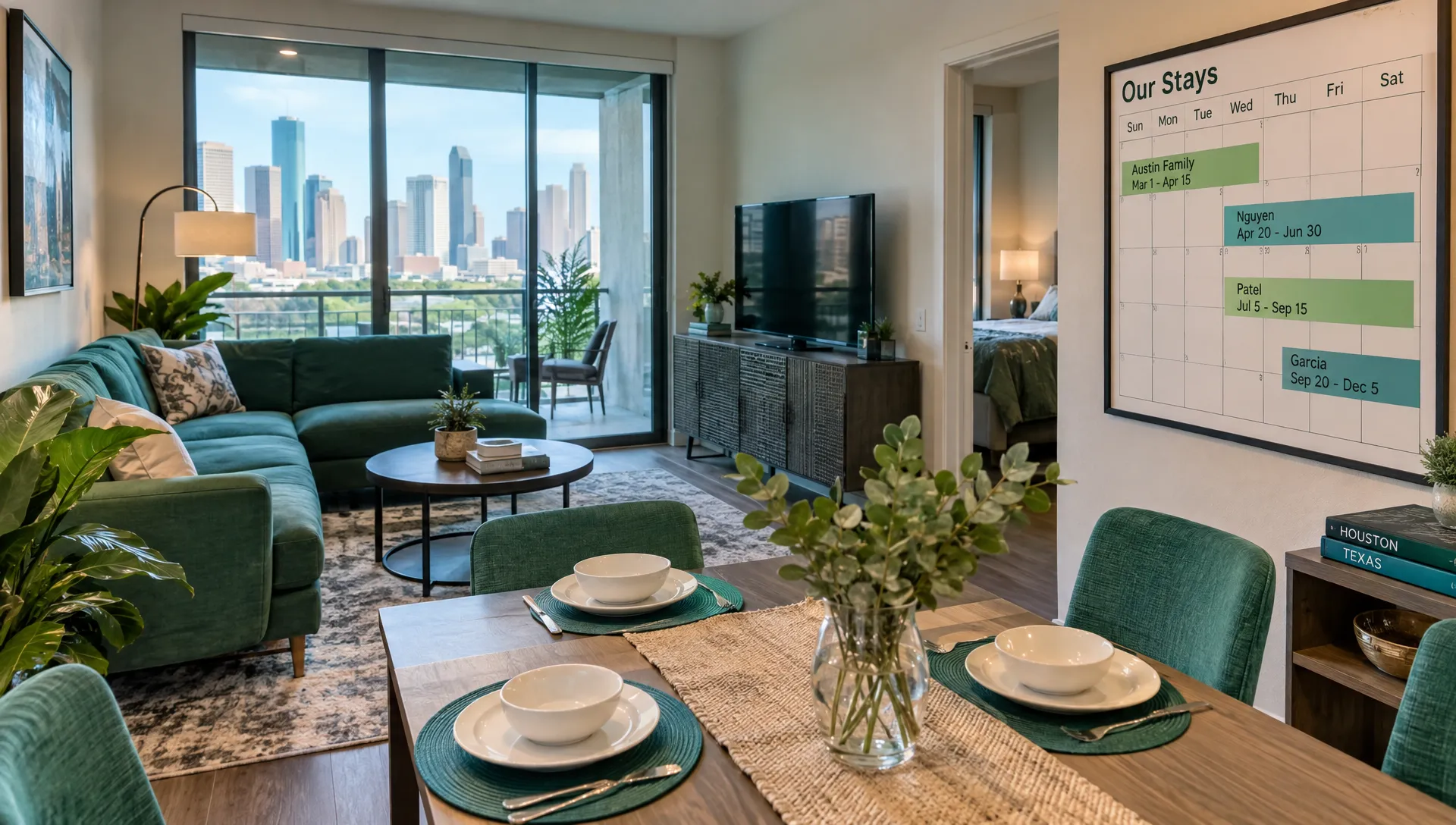
A well-run mid-term rental is not simply a nightly listing with a large monthly discount. It needs pricing, furnishings and booking practices that support extended occupancy while protecting the owner's annual financial goals.
Prepare the home for everyday living
Someone staying for several months needs a functional kitchen, dependable internet, comfortable sleeping arrangements and practical storage. Durable furnishings and replaceable household items are generally more useful than decorative pieces that are expensive to maintain.
Set clear expectations about utilities. An all-inclusive rate may be attractive, but unrestricted usage can weaken margins. Any usage allowance or additional-charge arrangement should be lawful, clearly disclosed and compatible with the booking channel's rules.
An owner considering Airbnb for a year should use the same practical standard: furnish for daily living, not just for listing photographs. Budget for replacement items and ordinary wear even when only one person occupies the home.
Market to people who need temporary housing
Potential mid-term renters include relocating households, people displaced by home repairs and professionals on temporary assignments. These are possible audiences, not evidence that your specific Houston property will attract enough demand.
Evaluate comparable furnished properties, location, parking, workspace suitability and proximity to relevant employment centers. Track qualified inquiries and completed bookings rather than assuming a neighborhood's popularity guarantees occupancy.
For owners developing employer-facing outreach, Houston B2B marketing services can provide SEO and paid-search support for reaching business audiences. Keep the campaign focused on relevant housing needs and measure whether inquiries become suitable bookings.
Do not depend entirely on one listing channel. Where permitted, a broader marketing approach can reduce reliance on a single platform, but each channel introduces its own costs and administration. Include those expenses in your annual forecast.
Use renewals to preserve flexibility
A shorter initial stay followed by an agreed extension can be more practical than committing to twelve months immediately. It gives both parties time to determine whether the arrangement works, without promising that either side will renew.
Set a renewal decision date early enough to plan the next booking. Review upcoming maintenance, pricing and your own property plans before agreeing to an extension.
Compared with Airbnb for a year, this structure creates more opportunities to reassess the property. Its trade-off is that future occupancy remains uncertain until another agreement is confirmed. Reserve funds and realistic vacancy assumptions are still necessary.
When is the year-long approach worth choosing?
A twelve-month furnished stay is most compelling when you have no foreseeable need to sell or occupy the home, the proposed rate covers all ownership costs and the arrangement has been properly reviewed. It can also suit an owner who values fewer transitions more than frequent pricing opportunities.
A mid-term strategy is often a better fit when your plans are less settled, furnished demand appears viable and you can tolerate some booking gaps. It provides more opportunities to reposition the property, although it requires more marketing and turnover coordination.
Before choosing, answer four practical questions:
- What annual cash flow remains after vacancy, management, utilities and ownership costs?
- Could I honor the full occupancy period if I decided to sell or move back?
- Have I confirmed the agreement, insurance coverage and applicable property restrictions?
- Do I have enough reserves to handle payment interruption or an unplanned vacancy?
The strongest case for Airbnb for a year is a financially sound arrangement that also fits your timeline. A long booking should support your investment plan, not replace one.
Frequently asked questions
Can an Airbnb guest stay for an entire year? A host may offer a year-long stay when platform settings, property restrictions and applicable law permit it. Owners should verify current booking rules and obtain advice about the legal obligations created by the arrangement.
Is a year-long furnished stay still a mid-term rental? Mid-term rentals commonly describe stays of one to six months, though terminology varies. A twelve-month furnished arrangement is better evaluated as a year-long occupancy commitment, regardless of how it is advertised.
Does one long booking eliminate vacancy risk? No. It can reduce planned gaps between occupants, but early departures, payment problems or repairs can still interrupt income. A confirmed reservation is not the same as guaranteed annual collections.
Is Airbnb for a year better than accepting several mid-term guests? It depends on collected income, total expenses and the value of retaining flexibility. One occupant can reduce turnover costs, while several mid-term stays may offer pricing opportunities and more convenient points to reconsider your plans.
Evaluate your property's best furnished-rental strategy
Scott Property Management specializes in furnished rental properties, with a focus on the potential for more consistent income and fewer turnovers through mid-term stays. It also provides up to $50,000 in property damage protection as standard risk protection. Ask about applicable terms, exclusions and claim procedures, and do not assume that protection replaces appropriate property insurance.
If you are weighing a year-long commitment against several furnished stays, discuss your property with Scott Property Management. Bring your ownership costs, expected sale or move-back timeline and furnishing budget so the conversation starts with the factors that determine whether the strategy fits.