

Inventory Checklists for Long Term Furnished Apartments
A missing remote, a stained mattress or an unrecorded sofa tear can turn a routine move-out into a costly disagreement. For owners of long term furnished apartments, a detailed inventory helps establish what was supplied, what condition it was in and what needs attention before the next resident arrives.
That matters for mid-term rentals, where residents may stay for several weeks or months rather than a few nights. Fewer turnovers can reduce operational work, but furnishings still need a documented baseline and a practical replacement plan.
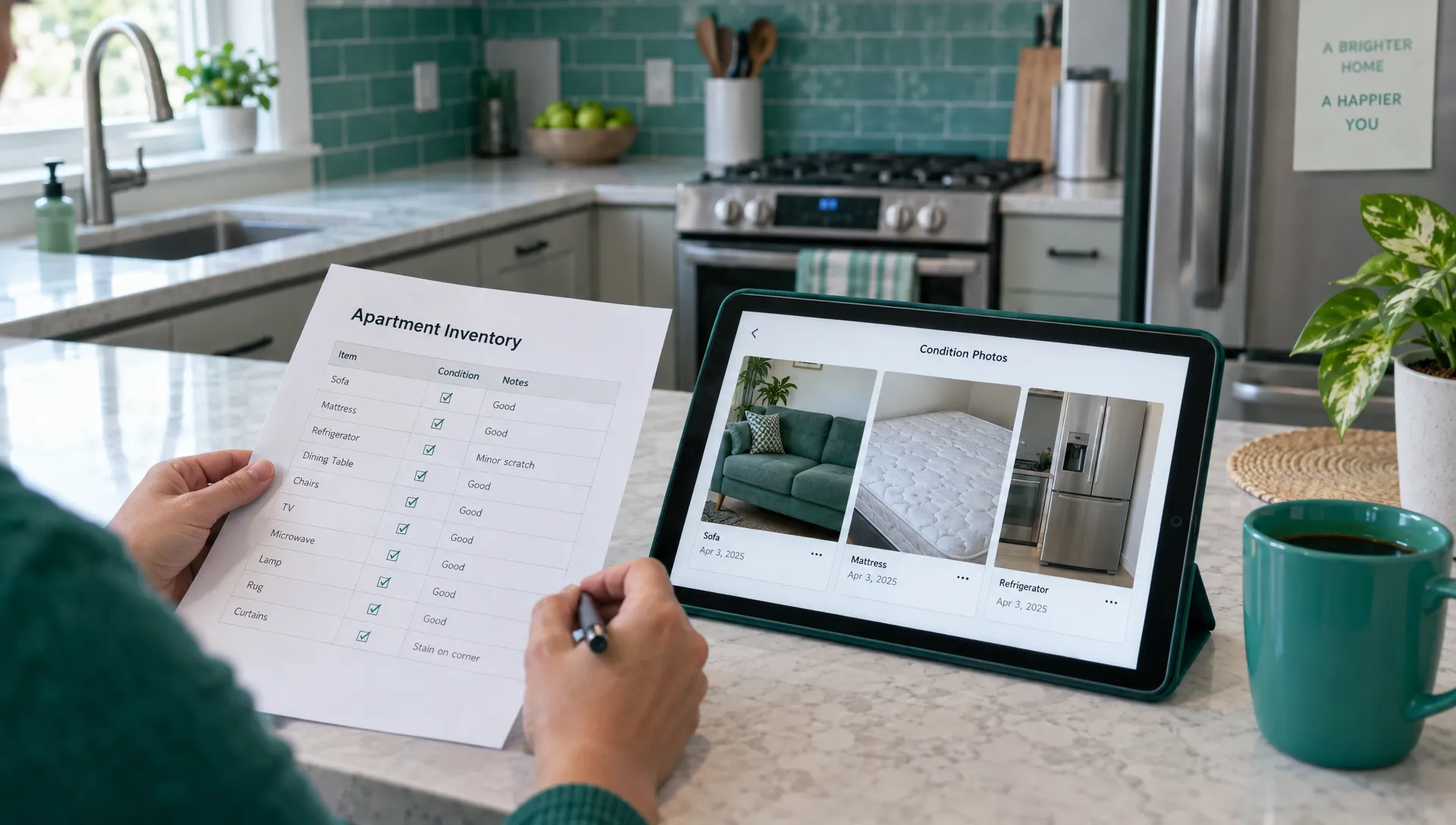
The most useful inventory is more than a shopping list. It combines a room-by-room record, dated condition photos and a clear handover process. Whether you are furnishing an investment apartment or preparing an inherited property for rental, the following framework gives you a repeatable system.
What an inventory for long term furnished apartments should record
Keep one master inventory for the property, then create a dated copy for each tenancy. A spreadsheet works well because you can filter by room, update quantities and link photographs without rebuilding the document.
Use these fields as your template:
| Inventory field | What to record |
|---|---|
| Room and item ID | A consistent identifier, such as BED1-03 |
| Item description | Furniture type, material, color and distinguishing features |
| Quantity | Number supplied and number confirmed at handover |
| Condition | A rating plus a specific description of any defect |
| Function check | Whether an appliance, light or other functional item works |
| Photo reference | File name or link connecting the item to its dated photographs |
| Purchase information | Purchase date, receipt and original cost, where available |
| Replacement planning | Current replacement estimate and expected maintenance needs |
| Responsibility | Owner-supplied, resident-owned or excluded from the rental |
Define condition labels consistently. For example, “good” might mean fully functional with minor cosmetic wear, while “service needed” means an item requires attention before use. Labels alone are not enough: “small scratch on the left armrest” is more useful than “used sofa.”
Keep replacement budgeting separate from resident charges. A replacement estimate helps you plan expenses, but it does not automatically establish what a resident legally owes after damage.
Room-by-room inventory checklist
For long term furnished apartments, start with the items promised in the listing and lease, then verify them physically. Do not mark an item as present because it appeared in an older listing photograph.
The checklist below covers common furnished-rental contents. Adjust it to the apartment’s layout, occupancy and advertised amenities rather than treating every item as mandatory.
| Area | Items to count and document | Condition or function checks |
|---|---|---|
| Bedrooms | Bed frames, mattresses, protectors, pillows, bedding, nightstands, lamps, dressers and hangers | Frame stability, mattress condition, drawer operation and working lights |
| Living room | Sofa, chairs, tables, television, remotes, lamps, rugs and window coverings | Upholstery, furniture stability, remote pairing and blind operation |
| Dining area | Table, chairs and any supplied placemats | Stable legs, secure seats and surface damage |
| Kitchen | Refrigerator, range, microwave, supplied small appliances, cookware, dishes, glasses and utensils | Appliance operation, chips, cracks, cleanliness and missing parts |
| Bathrooms | Towels, bath mats, shower curtains or screens, wastebaskets and supplied storage | Textile condition, visible leaks and secure fixtures |
| Laundry area | Washer, dryer, iron, ironing board and drying rack, if supplied | Operation, visible hose condition, lint-screen condition and accessories |
| Workspace | Desk, chair, task light and supplied networking equipment | Chair adjustment, desk stability, lighting and internet connectivity |
| Entry and storage | Keys, fobs, parking devices, shelves and owner-supplied cleaning equipment | Working access devices, shelf security and equipment condition |
| Balcony or patio | Permitted outdoor furniture and accessories | Corrosion, loose hardware and weather damage |
| Safety equipment | Installed alarms and any supplied extinguishers or emergency equipment | Required testing, service information and accessibility |
For long term furnished apartments, record individual quantities within each category. “Kitchenware supplied” cannot establish whether there were four dinner plates or eight, or whether a blender included its lid.
Bedrooms: separate durable items from replaceable textiles
Assign each mattress and bed frame its own record. Note mattress size, visible staining, protector condition and any existing frame damage. Photograph identifying details without retaining unnecessary images of a resident’s personal belongings.
Count sheets, pillowcases and towels by type rather than recording “one linen set.” If spare linens are provided, distinguish those in resident-accessible storage from supplies reserved for turnovers.
Keep a separate note for routine textile replacement. A worn towel and a damaged dresser have different replacement cycles, so combining them under one furniture budget makes planning less useful. Remove personal keepsakes and irreplaceable inherited items before the initial inventory rather than relying on documentation to protect them.
Kitchens: verify completeness and safe operation
Count dishes, glasses, cutlery, pans and food-storage containers separately. Check lids, appliance attachments and removable parts, which are easy to overlook during a quick walkthrough.
For long term furnished apartments, kitchen completeness matters because residents are likely to cook regularly. Match quantities to the advertised occupancy and your operating plan, including any reasonable spare stock you choose to provide.
Record model and serial numbers for major appliances and higher-value equipment. Keep receipts in the owner’s records rather than attaching financial documents to the resident’s copy. Check relevant products against the Consumer Product Safety Commission’s recall listings, and address recalled or unsafe items before occupancy.
Workspaces, access devices and utilities
If the listing promises a workspace, document the actual desk, chair and lighting provided. An attractive listing photo does not establish whether the chair adjusts properly or the desk is stable.
Give keys, fobs and garage remotes individual identifiers where practical, and record how many were issued. Keep access codes and Wi-Fi passwords in a separate, securely shared handover document rather than in an inventory circulated among vendors.
Also distinguish equipment from service. Recording a router does not explain who pays for internet, just as listing a washer does not establish whether water and electricity are included. Those responsibilities belong in the rental agreement.
Document the move-in condition before handing over access
A reliable handover connects the written inventory to evidence of the apartment’s actual condition. Complete your inspection after cleaning and repairs, as close to possession as practical.
For long term furnished apartments, use the same documentation sequence at every turnover:
- Photograph each room broadly, then capture close-ups of valuable items and existing defects.
- Test supplied appliances, lights, remotes and access devices, recording any unresolved issue.
- Review the inventory with the resident and provide a dated copy.
- Give the resident a clearly stated process and timeframe for reporting overlooked discrepancies, consistent with the agreement and applicable law.
Use descriptive file names, such as BED1_mattress_corner_2026-10-30, instead of leaving hundreds of unnamed images in a phone gallery. Preserve the original files and store them with the tenancy record.
Ask the resident to acknowledge receipt and record disagreements rather than pressuring them to accept an inaccurate description. A signed inventory supports documentation; it is not a waiver of tenant rights or proof that hidden defects do not exist.
Do not list an unsafe or broken item as simply “noted.” Repair it, replace it or remove it, then update both the inventory and any advertised amenity affected by the change.
Keep the inventory current during a mid-term stay
An inventory becomes less useful when replacements happen without a record. A new microwave, a removed armchair or an additional key should trigger a dated update identifying what changed and why.
For long term furnished apartments, connect these updates to maintenance records. If a resident reports that a dining chair is loose, retain the report, repair details and outcome. That history helps distinguish an unresolved maintenance issue from a new problem discovered at move-out.
Ask maintenance providers to identify affected items using the same room labels or item IDs. Our guide to choosing a rental maintenance company explains other questions to ask when setting expectations for service and documentation.
Any occupied-property inspection should follow the rental agreement and applicable entry rules, with appropriate notice and coordination. A longer stay is not permission for unannounced inventory checks.
When a resident extends, review outstanding defects and equipment changes rather than recreating the entire inventory. Include any changes in the documentation used to handle a mid-term stay extension. An extension should not erase previously reported problems or automatically reset every item’s condition to “good.”
Use the same checklist at move-out
Inspect against the resident’s move-in version, including any agreed updates. Following the same room order and photo angles makes comparisons easier and reduces the chance of overlooking an item.
For long term furnished apartments, separate findings into missing items, new damage, ordinary wear and maintenance needs. Each category calls for a different response. A missing lamp is not the same as a sofa that has gradually softened through normal use.
In Texas residential tenancies, Property Code Section 92.104 limits security-deposit deductions to damages and charges for which the tenant is legally liable and excludes normal wear and tear. Other jurisdictions have their own rules, including requirements affecting notices, documentation and deadlines.
Document the finding before deciding whether a charge is appropriate. Retain comparison photos, relevant communications, repair invoices and the item’s available purchase history. Consider age, prior condition, repair options and any applicable depreciation rules rather than automatically charging the price of a brand-new replacement.
Finally, create a turnover action record with an assigned person and completion status. Recount essential items, complete repairs and update the master inventory before the next handover. This closes the loop between documenting a problem and actually resolving it.
Frequently asked questions
Does a furnished rental inventory need to list every small item? It should be detailed enough to verify what was supplied. For long term furnished apartments, count functional essentials such as plates, glasses and utensils by type. Document valuable or distinctive pieces individually, while avoiding excessive detail on disposable starter supplies.
Should the resident sign the inventory? A dated acknowledgment can help establish that the resident received and reviewed it. Allow corrections and document disagreements. The legal effect of a signature depends on the agreement and applicable law, so it should not be treated as blanket acceptance of every possible charge.
Is an inventory the same as a maintenance inspection? No. An inventory records contents and condition, while a maintenance inspection evaluates systems, safety and repair needs. They can happen during the same visit, but a complete furniture list does not prove that plumbing, electrical systems or safety equipment are functioning properly.
Can photos replace a written checklist? Photos support the checklist but rarely replace it. They may not show quantities, working condition or accessories stored in drawers. Written records provide context, while dated photographs make condition descriptions easier to verify.
Prepare your furnished rental with a repeatable process
A practical inventory makes handovers clearer, replacement planning easier and condition disputes more manageable. Start with one accurate master record, then keep it connected to each tenancy and maintenance update.
If you are preparing a Houston-area property for furnished mid-term stays, Scott Property Management specializes in furnished rental properties. Discuss your property, intended stay lengths and management needs to determine an appropriate approach for your investment.