

How Monthly Stays on Airbnb Can Reduce Turnover
Searches for monthly stays airbnb usually come from owners who want the income potential of furnished rentals without the churn of weekend bookings. For real estate investors, landlords and owners of inherited homes, the core benefit is simple: fewer guest changes mean fewer resets, fewer coordination tasks and a better chance of predictable net income.
Airbnb can still be useful for visibility, but the strategy is less about chasing the highest nightly rate and more about matching a furnished home with guests who need 30 days or longer. In Houston, that may include people relocating for work, families between homes, traveling professionals, insurance-displaced residents or owners preparing to sell later. When the stay length increases, turnover stops being a weekly event and becomes an occasional operating task.
Why monthly stays airbnb reduces turnover for furnished rentals
With short-term rentals, each checkout triggers cleaning, linen turnover, restocking, inspection, message follow-up, possible repair and another vacancy risk. Longer stays compress many of those events into one booking, which can make the property easier to operate and easier to forecast.
This does not mean every longer stay is automatically better. It means owners should look past the advertised nightly rate and study what happens between bookings. Turnover is where a lot of furnished rental profit quietly disappears.
Fewer checkouts mean fewer reset costs
A guest who stays 30 nights is not the same operationally as six separate five-night reservations. In many cases, the 30-night stay requires one pre-arrival setup and one post-departure reset instead of six separate reset cycles.
That difference matters because turnover is labor intensive even when nothing goes wrong. Someone has to inspect the home, coordinate cleaners, replace consumables, handle laundry, check furniture, confirm access codes and respond to the next arrival. The practical reason monthly stays airbnb can lower turnover is that the property spends more days being used as housing and fewer days being reset as hospitality.
A calmer calendar lowers management friction
Reduced turnover also changes the owner experience. There are fewer access instructions to send, fewer calendar gaps to manage and fewer moments when a small issue can delay the next check-in.
For owners weighing flexibility against stability, Scott Property Management's guide to month to month Airbnb stays explains how this approach sits between traditional leasing and high-turnover short-term rentals. That middle ground is often attractive for owners who want strong rental income without the constant pace of nightly hospitality.
What turnover really costs property owners
Turnover is not just the cleaning invoice. It is the total operating drag created every time one guest leaves and another arrives. Some of those costs are visible, while others show up as time, vacancy and accelerated wear.
| Turnover item | How it affects net income | Why longer stays help |
|---|---|---|
| Cleaning coordination | Requires scheduling, quality control and follow-up | Fewer departures mean fewer full resets |
| Laundry and linens | Increases washing cycles and replacement needs | Longer stays reduce repeated linen handling |
| Consumables | Toiletries, paper goods and kitchen basics must be restocked | Supplies can be planned less frequently |
| Maintenance checks | Each checkout may reveal repairs or damage | Inspections can become more scheduled and less reactive |
| Vacancy gaps | Empty nights between bookings reduce income | Longer reservations can cover more of the month |
| Owner or manager time | Messaging, vendor coordination and calendar work add up | Fewer booking cycles reduce administrative load |
A monthly stays airbnb plan does not eliminate these costs, but it can spread them across more occupied nights. For investors, that distinction is important because net income depends on what remains after the property is cleaned, maintained, restocked and made ready again.
Mid-term guests are usually staying for a reason
The strongest mid-term rental demand often comes from guests who need a functional home base rather than a weekend experience. They may be in town for a work assignment, an extended medical visit, relocation, home renovation or insurance-related displacement.
Because the stay has a practical purpose, expectations are closer to housing than hotel-style hospitality. These guests often care about reliable Wi-Fi, a stocked kitchen, laundry access, a comfortable bed, parking, workspace and clear rules. Owners still need lawful, consistent screening practices and should follow platform policies, local rules and fair housing requirements.
Why this matters for wear and tear
Frequent arrivals and departures create predictable wear. Suitcases hit walls, furniture moves, towels and linens cycle constantly and cleaners work under time pressure between check-out and check-in windows. Longer stays do not remove wear and tear, but they can reduce the repeated impact of back-to-back turnovers.
Routine oversight still matters, especially when a furnished home includes appliances, furniture, linens and stocked kitchens. Proactive property maintenance services can help prevent small issues, such as leaks or appliance problems, from becoming expensive rental damage.
How to prepare a furnished home for longer stays
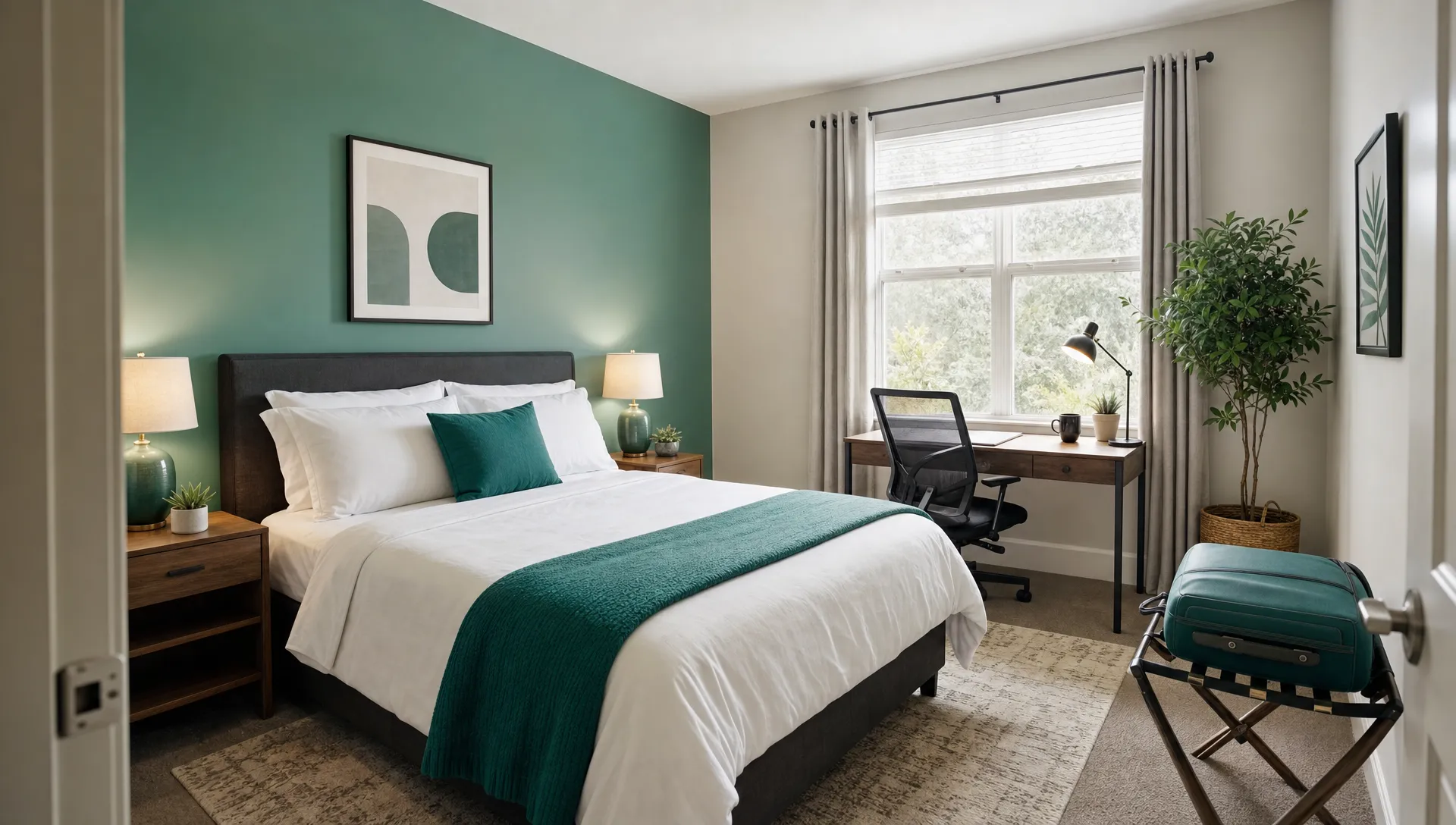
The best monthly stays airbnb setup treats the property as a comfortable temporary residence, not just a place to sleep. A mid-term guest is likely to cook, do laundry, work, receive mail or packages and settle into a routine. The home needs to support that daily use.
Set expectations before booking
Clear expectations reduce conflict and protect the property. Before accepting longer stays, owners should define the minimum stay, preferred stay length, utility expectations, pet rules, smoking rules, parking details, maintenance access procedures and check-out standards.
In some situations, owners may also use a rental agreement where permitted by platform rules and local law. That agreement should be properly disclosed and reviewed by a qualified professional. The goal is not to make the process complicated, but to make sure the guest, owner and manager understand the arrangement before move-in.
Furnish for living, not just visiting
A beautiful space may photograph well, but a livable space earns longer stays. Mid-term guests notice mattresses, blackout curtains, cookware, storage, seating, lighting and internet reliability. They also notice whether the home has enough basics to function for weeks rather than days.
This is where owners can reduce turnover indirectly. If the home is comfortable for daily life, guests are less likely to cut a stay short, complain about missing essentials or require repeated service visits for avoidable issues.
How pricing changes when turnover drops
A common mistake is comparing a monthly rate to the best possible weekend nightly rate. That comparison ignores vacancy, cleaning, maintenance coordination and time. A lower average nightly rate may still produce better net income if the booking covers most of a month and avoids multiple empty gaps.
For owners focused on net income, monthly stays airbnb should be evaluated by contribution per occupied month, not by headline nightly rate. The more complete question is: after cleaning, supplies, utilities, platform fees, repairs and management time, which strategy leaves the owner in a stronger position?
Build in margin for utilities and maintenance
Longer stays mean normal residential use. Guests may cook more, wash clothes more often and use heating or air conditioning throughout the day. Owners should account for utilities, internet, lawn or pool service if applicable, routine supplies and normal maintenance when setting a monthly price.
A pricing model that ignores these costs can look strong on the calendar but feel weak in the bank account. The goal is not just occupancy. The goal is profitable occupancy with fewer unpleasant surprises.
Protect against downtime
Reduced turnover helps most when the property is prepared before the booking starts and maintained during the stay. A missed repair, weak cleaning process or unclear house rule can create downtime that wipes out the benefit of a longer reservation.
Scott Property Management specializes in furnished rental properties and provides up to $50,000 in property damage protection as standard risk protection. That kind of risk planning is especially valuable for owners who want the steadier feel of mid-term rentals without managing every operational detail themselves.
When monthly stays may not be the right fit
Longer furnished stays are powerful, but they are not right for every property or every owner goal. If you need frequent personal access to the home, have restrictive HOA rules, face uncertain local regulations or cannot furnish the property properly, a mid-term rental strategy may require more preparation before launch.
Before relying on monthly stays airbnb, owners should confirm city rules, HOA or condo restrictions, platform settings, insurance requirements, tax treatment and lender considerations. They should also evaluate whether the local area has demand from traveling professionals, relocating households, insurance stays or project-based workers.
Another issue is pricing discipline. Some owners discount heavily just to fill the calendar, then discover that utility costs, maintenance and wear are higher than expected. Longer stays work best when they are priced carefully and supported by a management process that protects the home.
Owner checklist: reducing turnover without losing control
Use this checklist before shifting a furnished home toward longer Airbnb stays:
- Confirm HOA, city and building rules for furnished rentals and 30-night stays
- Set a minimum stay that supports your income and operating goals
- Price against expected net monthly income, not only nightly rate
- Upgrade essentials such as Wi-Fi, bedding, cookware, seating and lighting
- Document the property's condition before and after every stay
- Track cleaning, consumables, laundry, repairs and vacancy as separate costs
- Create clear house rules for pets, smoking, parking, guests and maintenance access
- Keep a repair reserve for normal wear, appliance issues and unexpected items
- Consider professional management if vendor coordination and guest communication are taking too much time
Owners who want a more hands-off approach can explore Scott Property Management's mid-term rental management resources to understand how professional oversight supports furnished rental performance.
Frequently Asked Questions
Are monthly Airbnb stays the same as mid-term rentals? Not always, but they often overlap. A mid-term rental typically refers to a furnished stay of about 30 days or longer, while Airbnb is one platform where owners can attract those guests.
Do longer stays always make more money than short-term rentals? No. The right strategy depends on demand, pricing, property condition, local rules, furnishing quality and management costs. Longer stays can improve net income when reduced turnover, lower vacancy and fewer operating resets outweigh the lower average nightly rate.
How long should a mid-term rental minimum stay be? Many owners start with a 30-night minimum because it aligns with common mid-term guest needs and may reduce short-stay turnover. Rules vary by location and property type, so owners should verify local requirements before setting minimums.
Can monthly stays reduce property damage? They can reduce some damage associated with frequent check-ins, check-outs and repeated cleaning cycles. They do not eliminate risk, which is why inspections, clear rules, maintenance and appropriate protection are still important. In search language, monthly stays airbnb points to a strategy that reduces churn, not a guarantee that problems never happen.
Make your furnished rental easier to operate
Turnover is where many furnished rental strategies lose margin. By shifting from frequent checkouts to qualified longer stays, owners can protect their time, reduce operating friction and pursue steadier income.
A monthly stays airbnb strategy works best when the home is priced carefully, furnished for real daily living and supported by consistent management. For Houston-area owners who want stronger rental income with fewer moving parts, Scott Property Management can help evaluate whether a mid-term furnished rental approach fits the property and the owner's goals.