
Setting Utility Limits for Airbnb Medium Term Rentals
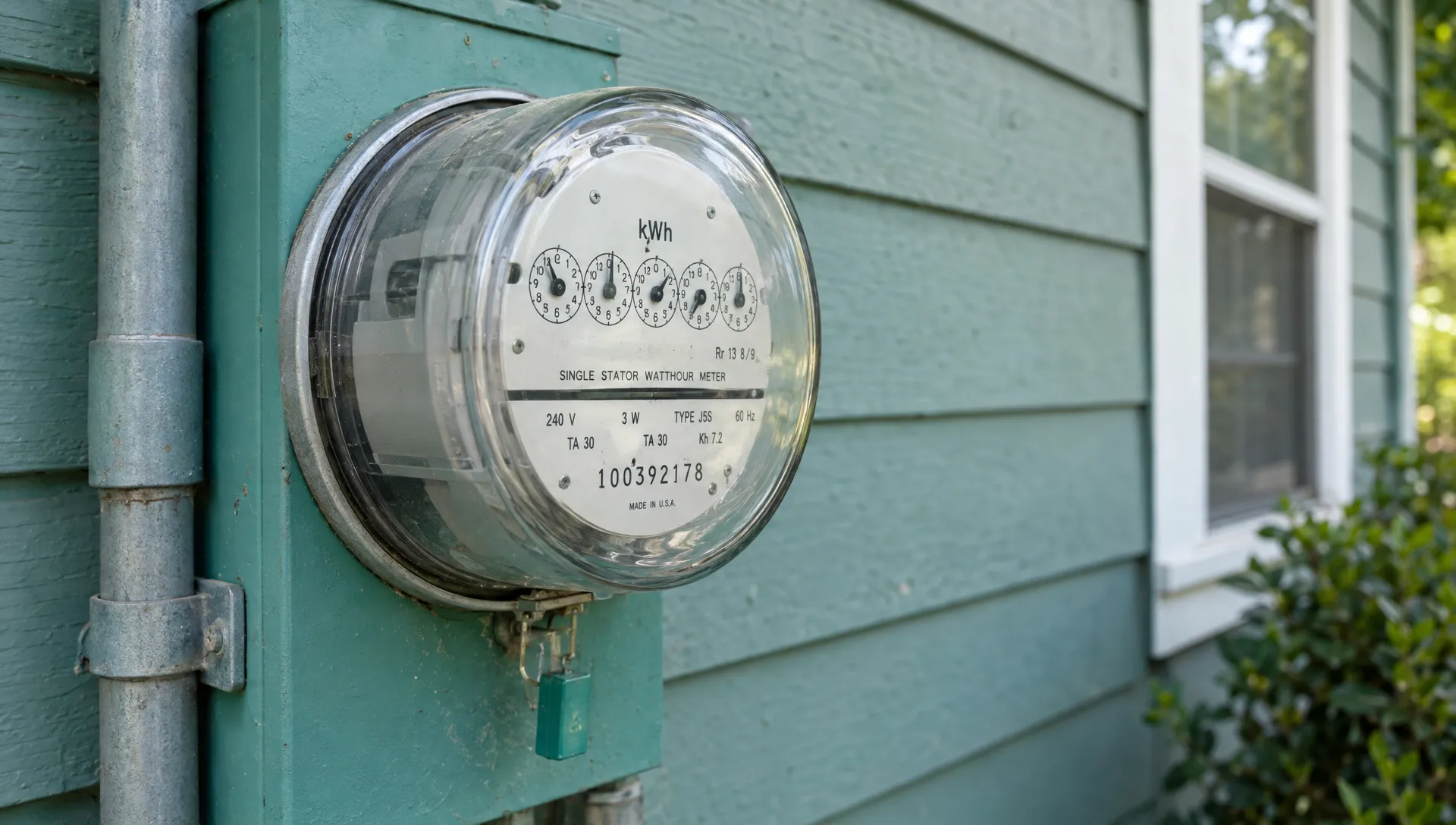
Utility limits for Airbnb medium term rentals should protect your operating budget without making guests feel they are watching a meter every day. For a furnished Houston property, the practical approach is to include normal household use, account for seasonal cooling costs and explain any permitted overage charges before booking.
The challenge is not simply choosing a dollar amount. Owners also need a fair calculation method, clear documentation and a billing process that complies with applicable law and Airbnb’s current rules. A poorly designed allowance can create more disputes than savings.
Choose the right utility arrangement
Start by deciding what the advertised rent actually includes. Three common arrangements have different trade-offs:
| Arrangement | How it works | Main consideration |
|---|---|---|
| Fully included utilities | The owner pays covered utility bills without a separate usage charge | Simple for guests, but the owner absorbs cost fluctuations |
| Included allowance | Rent covers a defined amount, with any permitted excess handled under disclosed terms | Requires clear calculations and supporting bills |
| Resident-held accounts | The resident establishes eligible services directly | May be impractical for shorter furnished stays and requires provider and legal review |
For many mid-term stays, keeping essential services active in the owner’s name reduces move-in friction. Whether an allowance makes sense depends on the property’s consumption history and whether additional charges are permitted for that booking.
Keep predictable services, such as a fixed-price internet plan, separate from usage-sensitive expenses. Electricity, gas, water and sewer need more careful treatment because costs can vary with weather, occupancy and equipment condition.
Before setting an allowance, incorporate utilities into your broader budget for a furnished mid-term rental. An allowance should support realistic pricing, not compensate for rent that was set too low.
Calculate realistic limits for Airbnb medium term rentals
A defensible allowance starts with the home’s actual operating costs. A round number borrowed from another landlord may be too restrictive for a larger house or unnecessarily generous for an efficient condominium.
Use occupied bills and seasonal patterns
Review approximately 12 months of available bills, paying particular attention to months when the property was occupied. Vacant-home usage is not a reliable estimate for someone living, cooking and working there daily.
Separate consumption from rate changes. A higher electricity bill might reflect more kilowatt-hours, a different rate plan or both. Water charges can also include sewer and fixed service fees that do not move directly with consumption.
Consider the home’s size, insulation, HVAC condition, pool equipment and irrigation. Include the advertised occupancy when estimating normal use. A property marketed for a family should not have an allowance based on one person’s consumption.
For Airbnb medium term rentals in Houston, a summer allowance may need to differ from a mild-weather allowance. Use the property’s records to establish those differences rather than presenting an invented citywide benchmark.
Define the billing period and show the arithmetic
Choose a consistent basis, such as an allowance per 30 nights, and explain how partial periods work. Calendar-month billing can confuse guests when a stay starts halfway through a month or lasts 45 nights.
The following example is illustrative, not a recommended Houston allowance:
| Calculation | Example |
|---|---|
| Covered utility allowance per 30 nights | $250 |
| Reservation length | 45 nights |
| Prorated allowance: $250 × 45 ÷ 30 | $375 |
| Eligible utility charges attributable to the stay | $450 |
| Potential overage, if legally and contractually permitted | $75 |
State whether unused allowances carry forward between periods within the same reservation. Calculating across the whole stay can prevent an unusually hot week from triggering a charge even though total consumption remains within the overall allowance.
Also explain that an unused allowance is not a refundable deposit, if that is how your arrangement works. For Airbnb medium term rentals, transparent arithmetic is more useful than a vague instruction to keep utility use “reasonable.”
Check what you can charge before promising an overage policy
A disclosed utility allowance is not automatically an enforceable right to collect extra money. Your listing language, applicable law, any rental agreement and Airbnb’s payment rules all matter.
Before publishing a policy, review Airbnb’s current help guidance on additional fees, damage-related requests and off-platform payments. Confirm whether your proposed utility charge is permitted and which collection process applies. Do not assume a utility overage qualifies as property damage or that a reimbursement request will be approved.
For Houston properties, have a qualified local professional review any applicable Texas requirements involving utility allocation, submetering, tenant rights and billing disclosures. A reservation’s length alone does not resolve every legal question.
If the intended charge is not allowed or cannot be administered reliably, price expected utilities into the rent instead. Owners should not surprise guests with an invoice after departure simply because a bill exceeded expectations.
This is especially important for Airbnb medium term rentals because a longer stay can span multiple provider billing cycles. Settle the charging method before accepting the reservation, not when the first expensive bill arrives.
Put the allowance in clear, consistent language
Guests should be able to understand the policy without interpreting legal jargon. Identify the covered services, allowance amount, calculation period, evidence provided and permitted payment process.
The following wording is a starting point for professional review, not a ready-to-use legal clause:
Rent includes internet and trash service. Electricity, gas, water and sewer are included up to an allowance of $250 per 30 nights. The allowance for the reservation is calculated as $250 multiplied by the number of nights, divided by 30. Any permitted overage will be based on documented, eligible charges attributable to the stay, without markup. Provider bills and the calculation will be supplied for review. Any additional payment must comply with applicable law and Airbnb’s rules. Unused allowance amounts are not refundable.
Replace the illustrative amount with one supported by your property’s records. Add the agreed notification timing, treatment of extensions and method for allocating bills that overlap different occupants.
Keep the listing, pre-booking messages and any permitted agreement consistent. An acknowledgment helps establish what was communicated, but it does not override platform rules or legal protections.
The strongest utility policy for Airbnb medium term rentals explains what the owner will do as clearly as what the guest may owe.
Make the policy easy to find during the stay
Place the financial terms where guests can review them before committing. After booking, provide a concise reminder in the welcome guide alongside thermostat instructions and the contact for maintenance problems.
Separate essential property information from optional neighborhood recommendations. A welcome guide can include grocery stores, transportation options and LineFlip’s restaurant reservation marketplace for guests interested in buying or selling restaurant reservations. Those local resources belong in a different section from the home’s financial terms.
For utilities, focus on practical information: how the thermostat works, what to do if a toilet keeps running and how to report an AC system that struggles to cool. Explain that guests should report unusual conditions promptly rather than attempt repairs themselves.
An early check-in message can catch a maintenance issue before it becomes a full month of excessive consumption. Keep the message helpful, not accusatory.
Reconcile actual bills fairly
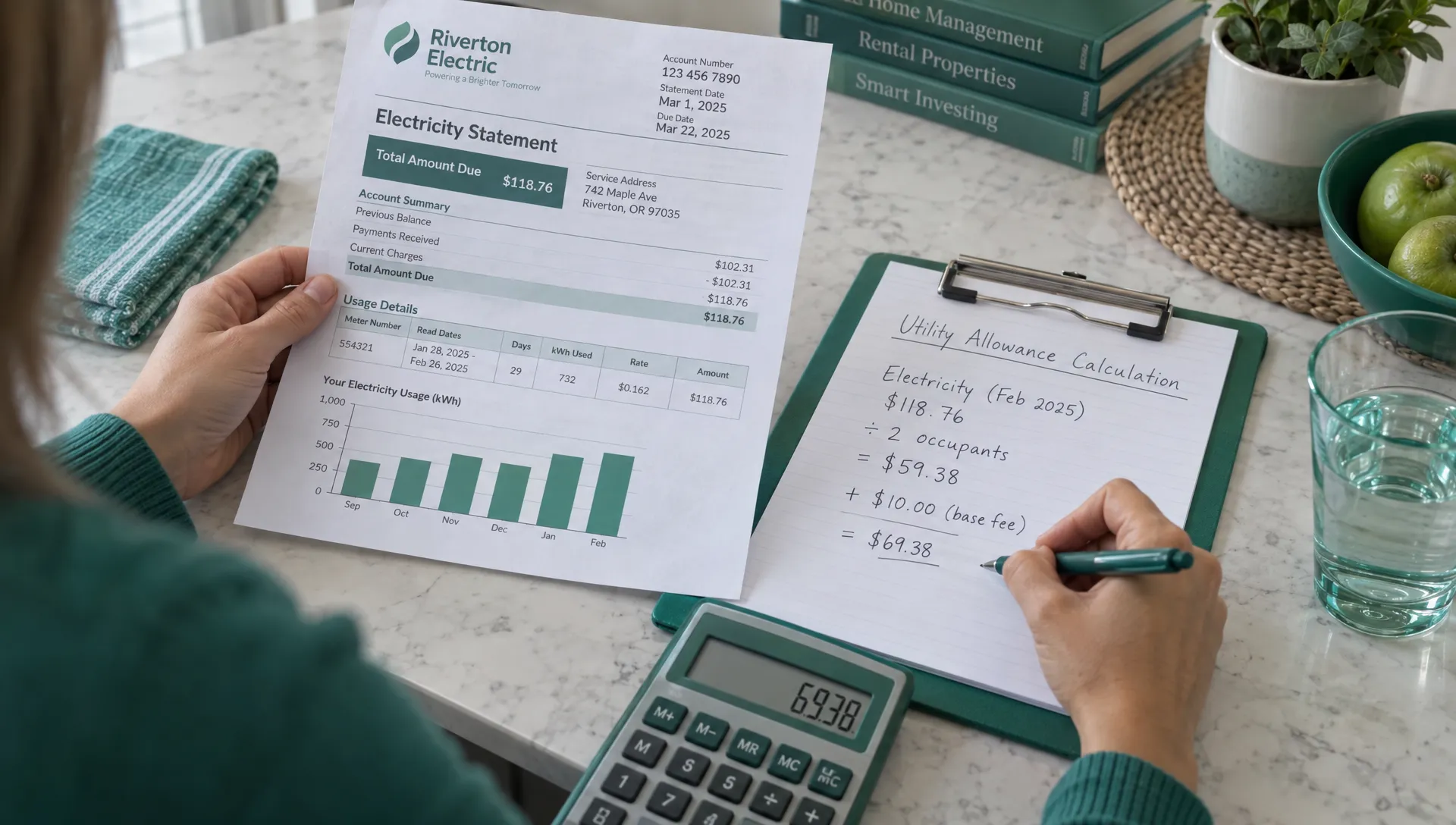
Utility statements rarely align perfectly with arrival and departure dates. Document how charges will be attributed to the reservation before you need to calculate an overage.
Where lawful and appropriate, dated meter readings can provide stronger support than dividing a bill between unrelated occupants. If you use a time-based allocation, disclose that method and recognize its limitations: equal days do not necessarily mean equal consumption.
Exclude charges that are not the guest’s responsibility under the agreed terms. Examples may include the owner’s late-payment fees, prior balances, account setup expenses or consumption outside the reservation. Do not automatically assign an irrigation leak or malfunctioning HVAC system to guest behavior.
When a potential overage appears, provide the relevant service dates, eligible charges, allowance calculation and supporting statement. Redact account numbers and unrelated personal information. Give the guest a reasonable opportunity to review the explanation before pursuing any permitted payment request.
For Airbnb medium term rentals, extensions require another calculation, not an assumption that the original allowance continues unchanged. When handling an extension to a mid-term stay, confirm the added dates, seasonal allowance and revised terms before the extension is finalized.
Reduce avoidable consumption before charging for it
A utility policy cannot fix an inefficient property. Owners have more control over maintenance and equipment than over every daily choice a resident makes.
Before occupancy, service the HVAC system, address running toilets, inspect visible leaks and confirm that windows and exterior doors close properly. Verify irrigation schedules and check that pool equipment, if present, is not operating longer than intended.
Give guests straightforward thermostat instructions that balance comfort, humidity control and energy use. Avoid rigid temperature restrictions that could create unsafe conditions or interfere with a resident’s health needs. Never use utility shutoffs or a remotely disabled thermostat to pressure someone over a disputed charge.
If connected thermostats or monitoring devices are installed, follow applicable privacy requirements and Airbnb’s disclosure rules. Explain their purpose and avoid treating ordinary occupancy patterns as evidence of misuse.
A modest increase in monthly pricing may be more economical than administering frequent small reimbursements. Compare the expected recovery with the staff time, accounting work and potential friction involved. Utility limits for Airbnb medium term rentals should reduce financial uncertainty, not become a second management job.
Frequently asked questions
What is a reasonable monthly utility allowance? There is no single reliable amount for every property. Base it on occupied bills, seasonal demand, advertised occupancy and the services covered. Label hypothetical examples clearly rather than treating them as local market standards.
Can I charge a guest automatically when the bill exceeds the allowance? Do not assume so. A charge must comply with applicable law, the booking terms and Airbnb’s current rules. Disclosure alone does not guarantee that an additional payment is permitted or collectible.
Should internet be included in the allowance? A fixed-price internet service is often easier to include directly in rent. Define any separate usage-based services clearly and do not promise unlimited service unless the actual plan supports that description.
How should Airbnb medium term rentals handle a final bill that arrives after checkout? Explain the expected billing delay before booking, then provide supporting documentation and follow applicable deadlines and platform procedures. Do not invent an estimate and present it as the provider’s final charge.
Does property damage protection cover utility overages? Do not assume it does. Damage protection and utility reimbursement address different risks. Review the applicable protection terms separately from your utility policy.
Build utility costs into a predictable rental plan
The most workable policy combines a realistic allowance, consistent disclosures and a documented process for handling exceptions. If separate billing creates too much uncertainty, inclusive pricing may be the better choice.
Scott Property Management specializes in furnished rentals and provides up to $50,000 in property damage protection as standard risk protection. To discuss how utility costs fit your Houston property’s mid-term rental plan, contact Scott Property Management.